Last updated October 30, 2026
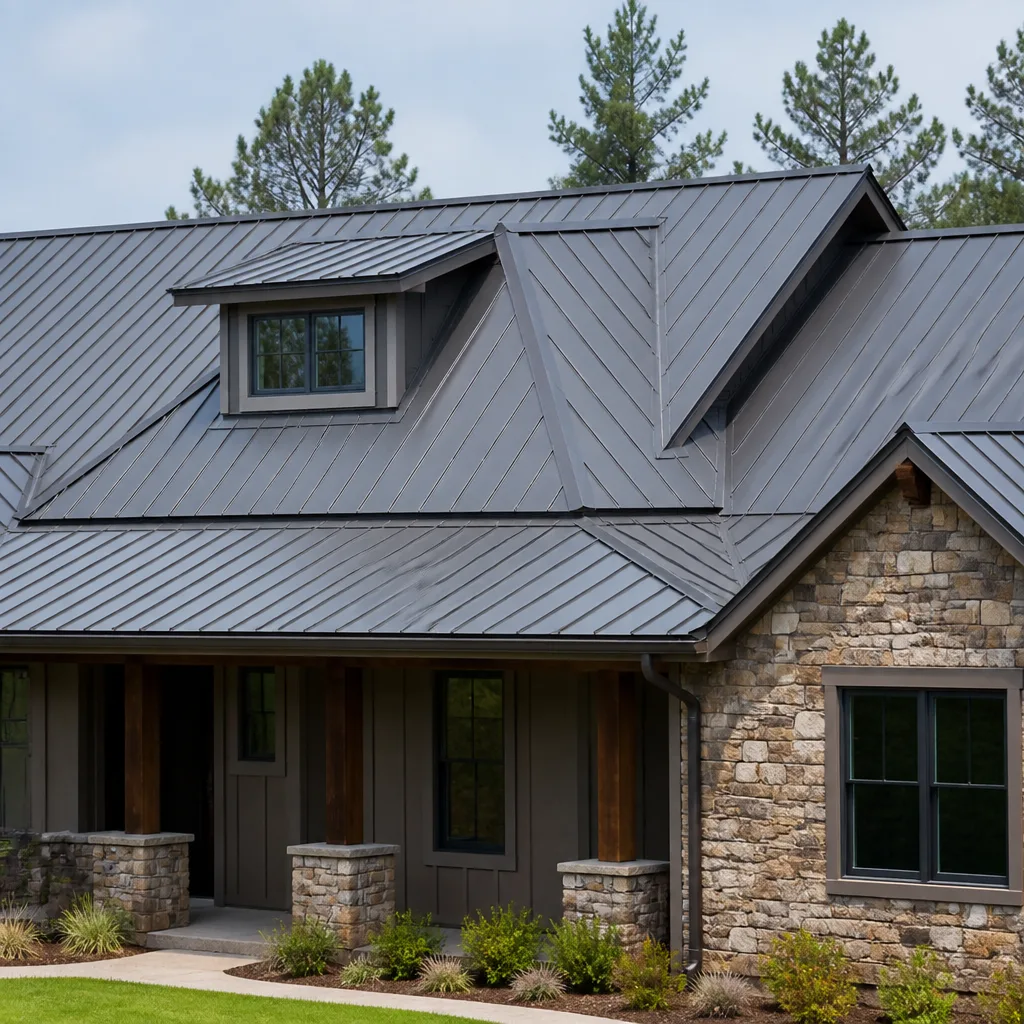 Metal roofing
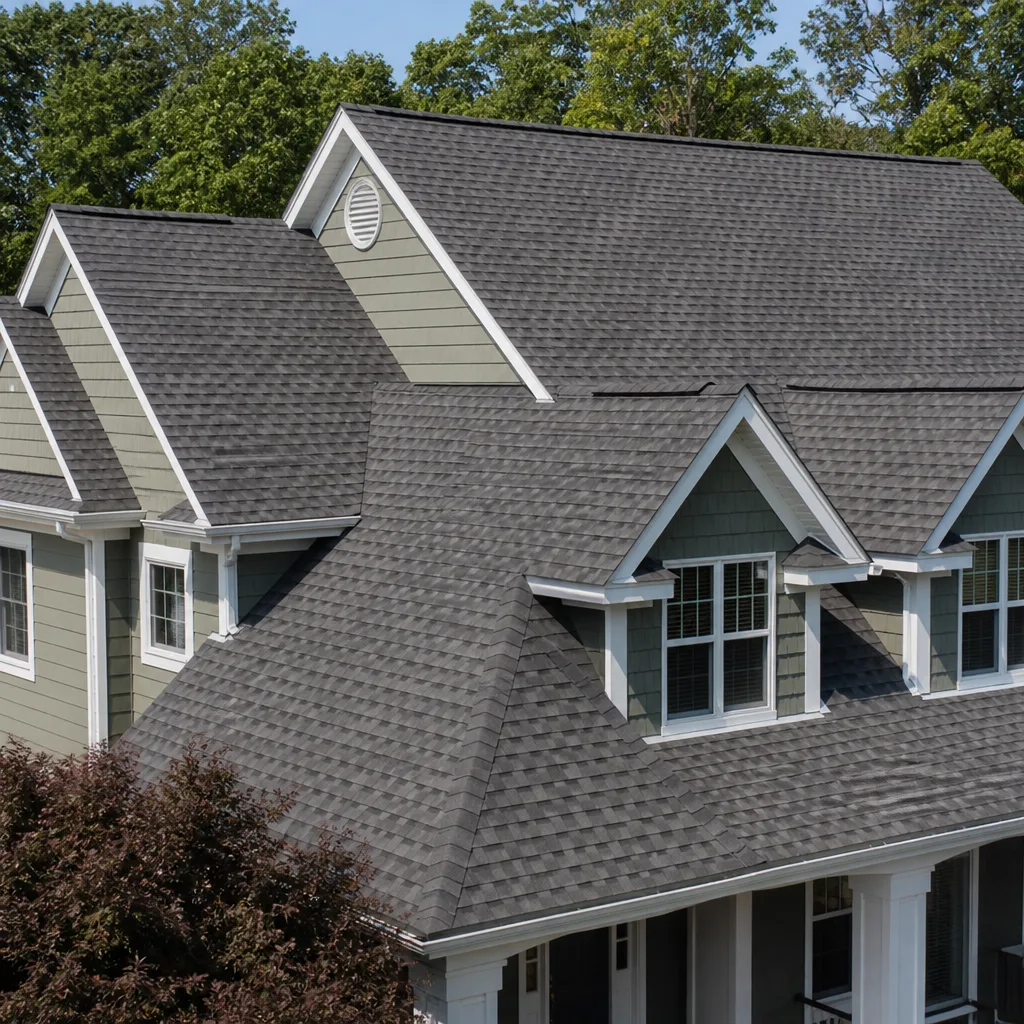 Architectural shingles
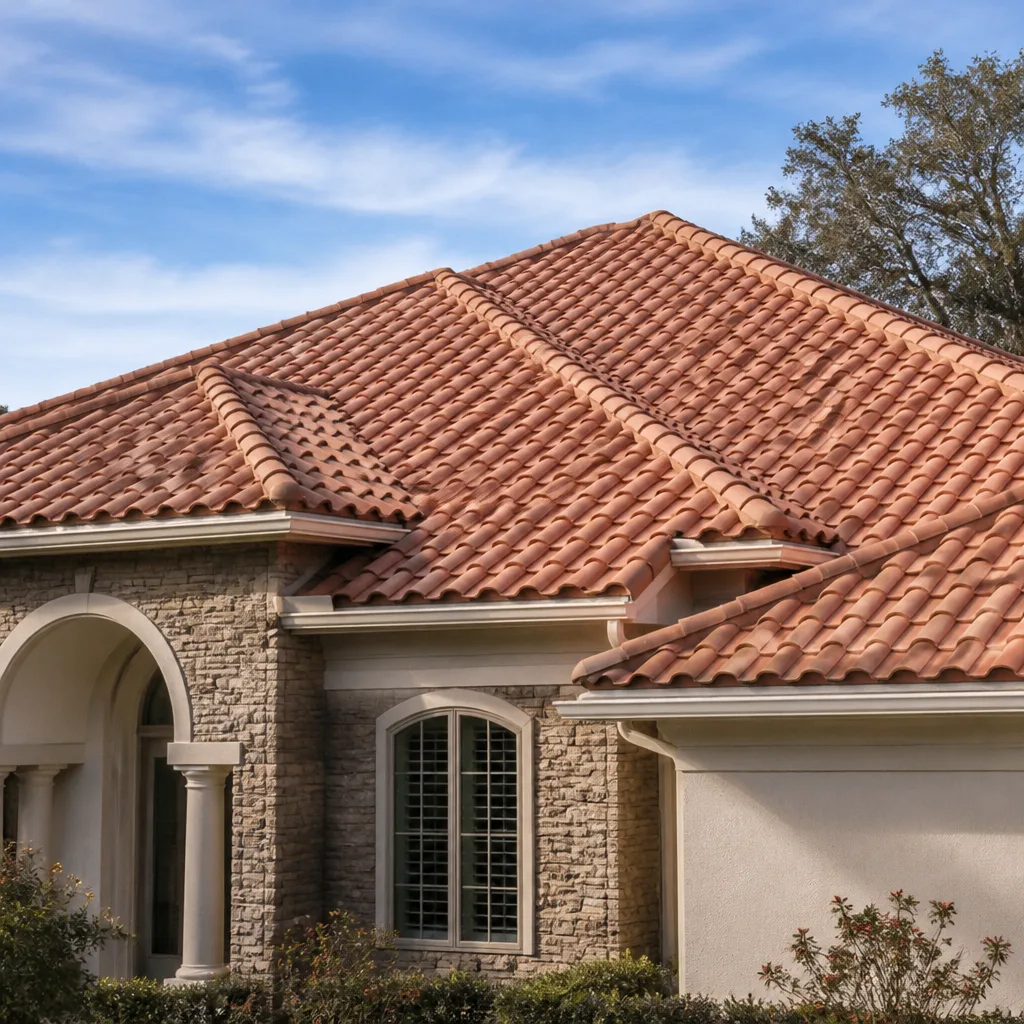 Tile roofing
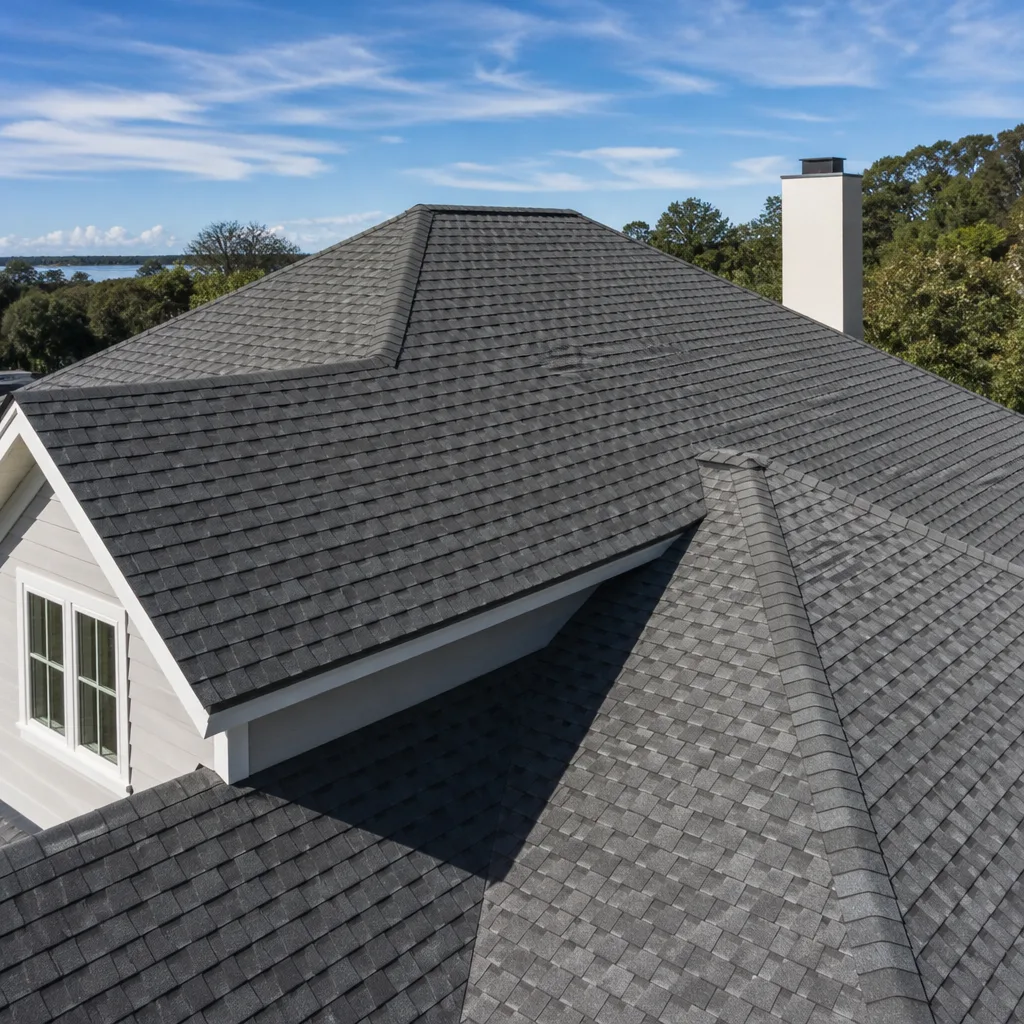 GAF
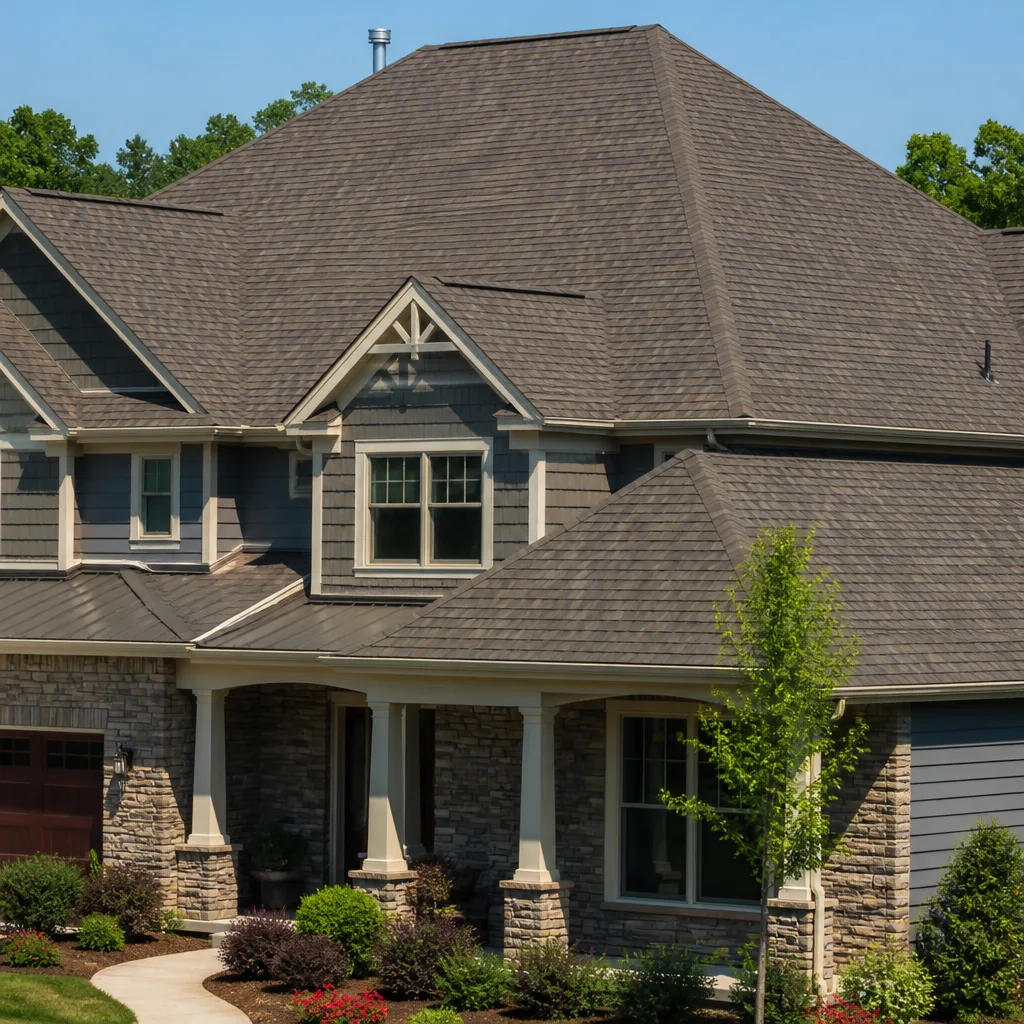 Owens Corning
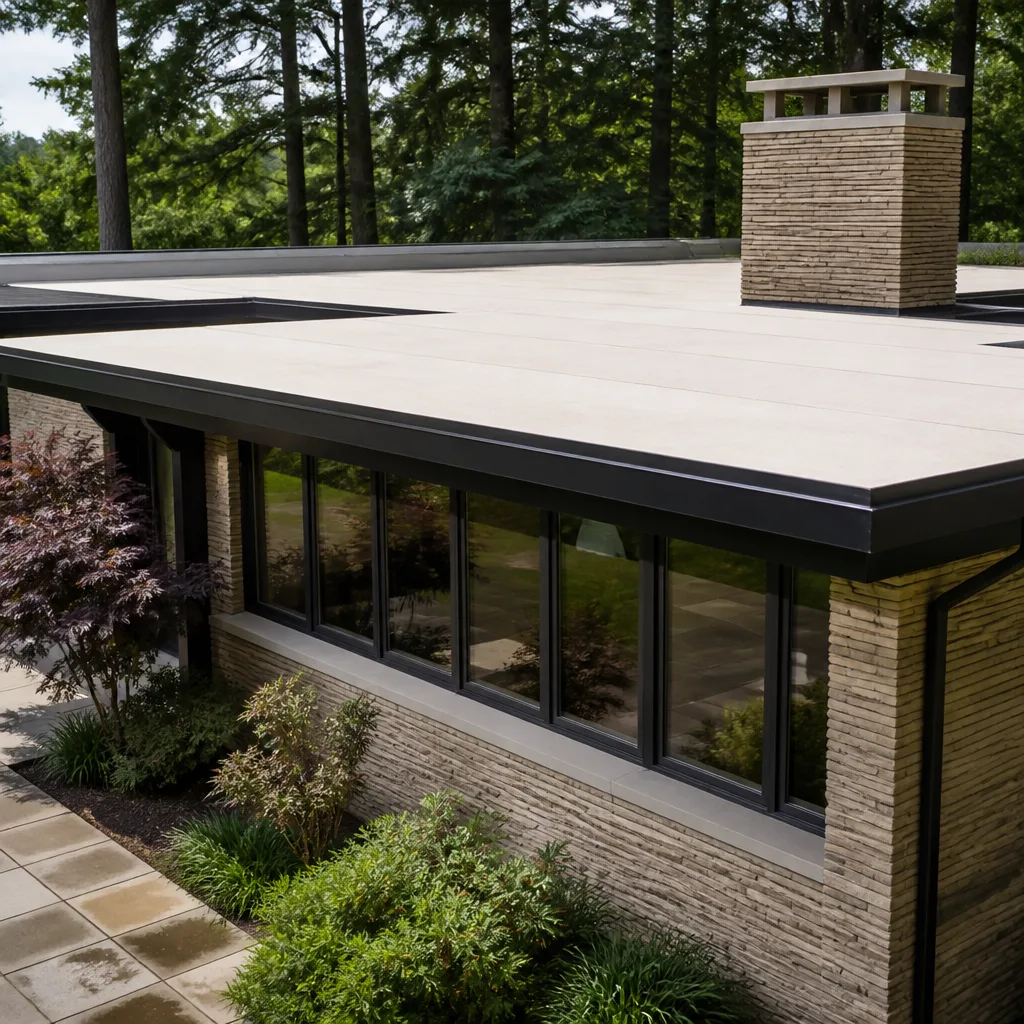 Flat & low-slope
Free roof inspection with deck photos before we talk money - GAF and Owens Corning certified installation
Roofing Cost Breakdown: The Yorba Linda Homeowner’s Reference for 2026
Two Yorba Linda homeowners with nearly identical 2,400-square-foot houses can receive quotes $8,000 apart from licensed contractors and both quotes are technically accurate. The difference isn’t dishonesty. It’s scope. One contractor priced a single-layer tear-off with basic underlayment and no flashing replacement. The other priced a two-layer tear-off, Class A fire-rated underlayment, all-new flashing, and a manufacturer-certified installation. Neither homeowner knows what’s actually inside their number until someone shows them. That’s what this guide does. We’ll walk through every line item in a Yorba Linda roofing quote, explain where costs come from, and give you the tools to compare bids apples-to-apples before you sign anything. For Roofing Warning Signs: A Yorba Linda Homeowner’s Reference Guide on spotting trouble early, see our companion resource.
Quick Answer
Roofing costs in Yorba Linda in 2026 typically range from $11,500 to $38,000 for a full replacement on a standard single-family home, depending on material choice, roof complexity, tear-off layers, and fire-zone requirements. Repairs run anywhere from $450 for a small shingle patch to $3,500 for a valley or flashing rebuild. The single biggest driver of quote variance is not the shingle brand – it’s the scope assumptions contractors make about tear-off, underlayment, and flashing.
Styles & brands we work with
Table of Contents
- The Line-Item Breakdown: What’s Actually Inside a Roofing Quote
- How Yorba Linda’s Fire Zone Designation Changes Material Costs
- Tile Replacement vs. Full Re-Roof: The Real Cost Difference
- What Manufacturer Certification Costs Contractors – and How It Flows Into Your Price
- Using Permit Records to Verify What Neighbors Actually Paid
- Yorba Linda Labor Rates and Why They Vary
- Hidden Costs Contractors Often Leave Out of Initial Quotes
- Material Comparison: Shingle, Tile, and Composite Pricing in 2026
The Line-Item Breakdown: What’s Actually Inside a Roofing Quote
A roofing quote in Yorba Linda should read like a recipe, not a dinner check. If you get a one-line bid that says “new roof: $22,400” with no breakdown, you’re not looking at a quote. You’re looking at a guess. Here’s what a properly itemized quote includes, and the typical 2026 price ranges for each line in the Yorba Linda market.
1. Tear-Off and Disposal: $1.50 – $3.00 per square foot
Removing the old roof is the most physically demanding part of the job, and it’s priced per square foot of roof surface, not per square foot of home footprint. A 2,400-square-foot home often has 3,000 – 3,400 square feet of actual roof. In Yorba Linda, where many homes still have the original concrete tile from the 1980s and 1990s, tear-off gets expensive fast. Tile weighs 9 – 11 pounds per square foot when installed, and hauling it off requires dump fees, labor hours, and sometimes a second crew. Disposal alone on a full tile tear-off can run $1,800 – $3,200.
What contractors leave vague: whether the quote includes tearing off one layer or two. Yorba Linda homes built before 2000 often have a second layer of shingles or old shake under the tile. Quote says “remove existing roof”? That’s one layer. Second layer is typically $1.00 – $1.50 extra per square foot. This is where two bids on the same house diverge by $3,000 without anyone lying.
2. Underlayment: $0.55 – $1.40 per square foot
Underlayment is the waterproof barrier between your deck and your roof covering. This is the line item that has changed most in Southern California over the last decade. Basic #30 felt runs about $0.55 per square foot. Synthetic underlayment runs $0.75 – $0.95. But in Yorba Linda, if you’re in a fire zone, a Class A assembly underlayment rated for ember resistance can run $1.10 – $1.40 per square foot. On a 3,200-square-foot roof, that’s a $1,760 difference between felt and fire-rated synthetic – and it’s not optional in many Yorba Linda neighborhoods.
We see homeowners get quoted basic felt, then learn later that their Wildland-Urban Interface (WUI) designation requires a higher-rated assembly. The contractor who quoted the higher number wasn’t padding. They were building to code. The contractor who quoted the lower number either didn’t check or assumed you’d accept whatever passes inspection. For a deeper look at the regulatory side, read our Roofing Permits, Codes & Inspections in CA: What You Need to Know.
3. Flashing: $900 – $3,500 flat range
Flashing is the metal that seals roof penetrations: chimneys, skylights, vents, valleys, and wall intersections. A good quote itemizes flashing separately. A vague quote buries it in “roofing materials” or omits it entirely. Replacing all flashing on a typical Yorba Linda home runs $900 – $1,700 for a straightforward roof with a few penetrations. Add a chimney, two skylights, and a valley, and you’re looking at $2,200 – $3,500.
This is the most common place contractors “save” money in a bid. They reuse existing flashing. Sometimes that works for another ten years. Sometimes it leaks in the first winter rain. In Yorba Linda, where we get concentrated downpours between long dry spells, failed flashing is the leading cause of roof leaks in homes under 15 years old. If a quote doesn’t say “all new flashing,” ask whether the old flashing is being reused. If it is, the number isn’t comparable to a bid that includes replacement.
4. Material: $1.80 – $9.00+ per square foot
This is the variable everyone focuses on, and it matters. But it’s rarely the source of the $8,000 gap. Architectural shingles run $2.10 – $3.40 per square foot in 2026. Designer shingles run $3.50 – $5.50. Composite tile runs $6.00 – $9.00. Concrete tile runs $4.50 – $7.50 installed, or $2.00 – $4.00 for the tile alone if you’re doing a like-for-like replacement. We’ll break material costs down further in the material comparison section below.
What gets missed: material waste. A roof with seven valleys and four dormers generates 18 – 22% waste. A simple gable roof generates 8 – 10%. Contractors who quote with tight waste factors look cheaper until the crew runs short mid-job and the change order hits.
How Yorba Linda’s Fire Zone Designation Changes Material Costs
Yorba Linda sits almost entirely within a Wildland-Urban Interface zone. The city’s eastern half, east of Fairmont Boulevard and up into the hills around Bryant Ranch and East Lake Village, carries the strictest fire-resistance requirements in the county. The western half, while still designated, often has more flexibility depending on the specific tract and HOA covenants.
In practical terms, here’s what that means for your roofing quote in 2026:
- Class A assemblies are baseline in the hills. Class A is the highest fire rating under ASTM E108. It doesn’t mean your roof won’t burn – it means the assembly resists flame spread and ember penetration. Achieving Class A with concrete tile or standing seam metal is straightforward. Achieving it with shingles requires a fire-rated underlayment and, in some cases, an additional barrier layer.
- Ember-resistant vents are now required on many Yorba Linda reroofs. Older homes have gable and soffit vents with quarter-inch mesh that embers pass through easily. 2026 code in WUI zones increasingly requires vents that meet ASTM E2886 or equivalent. These vents run $35 – $90 each, and a typical home needs 8 – 14 of them. That’s $280 – $1,260 that wasn’t in a Yorba Linda roofing quote five years ago.
- Tile and metal get a natural advantage. Concrete tile and standing seam metal are Class A by material alone, no special underlayment needed. Builders in Yorba Linda’s older tracts installed concrete tile for exactly this reason. If you’re replacing a tile roof and considering switching to shingles to save money, check your fire-zone requirement first. In many hillside neighborhoods, the savings disappear once you add the upgraded underlayment and ember-resistant accessories required to make shingles code-compliant.
This is where working with a contractor who does roof inspection in Yorba Linda as a standalone service pays off. A proper inspection documents your current assembly, your WUI designation, and what code requires before you gather quotes. You spend $350 – $500 on an inspection and save yourself from signing a bid that won’t pass the city’s fire-safety review.
Tile Replacement vs. Full Re-Roof: The Real Cost Difference
Maybe you don’t need a new roof. Maybe you need new tile. These are different jobs with different costs, and confusing them is one of the most expensive mistakes a Yorba Linda homeowner can make.
Like-for-like tile replacement means the tile is damaged or slipping but the underlayment, deck, and flashing are sound. A crew removes the broken tile, replaces it with matching or compatible tile, and re-secures loose pieces. Cost: $600 – $2,500 for a typical repair area. This is a repair, not a reroof.
A full re-roof means the underlayment has failed, the deck has water damage, or the roof has reached the end of its service life. The entire tile field comes off, the underlayment gets replaced, and either new tile or the salvaged tile goes back on. Cost: $14,000 – $32,000 for a Yorba Linda home, depending on tile type and whether the old tile is reusable.
Here’s the separator: concrete tile regularly outlasts its underlayment by 20 – 30 years. Tile installed in 1990 may still have decades of life left, but the felt under it is failing. In that scenario, you have two realistic options:
- Lift-and-relay: The crew removes the tile carefully, sets it aside, replaces the underlayment and flashing, then reinstalls the existing tile with new fasteners. Cost: $9 – $14 per square foot in 2026, roughly $27,000 – $42,000 for a 3,000-square-foot roof. It’s cheaper than full replacement because you’re not buying new tile.
- Full replacement: New underlayment, new flashing, and new tile. Cost: $14 – $22 per square foot, roughly $42,000 – $66,000. More expensive, but you get a clean 50-year material warranty and zero mismatch risk.
We’ve seen lift-and-relay jobs in Yorba Linda save homeowners $15,000 – $20,000 compared to full replacement. But lift-and-relay only works if the tile is still sound. Cracked tile, faded tile from a discontinued line, or tile that shatters during removal makes replacement the only option. A proper inspection answers this before you spend a dollar on quotes.
For a full picture of when repair beats replacement, see our guide on roof repair in Yorba Linda.
What Manufacturer Certification Costs Contractors – and How It Flows Into Your Price
Every major shingle and tile manufacturer runs a certification program for installers. GAF has Master Elite. CertainTeed has SELECT ShingleMaster. Owens Corning has Platinum Preferred. IKO has Craftsman Premier. The certifications aren’t free for the contractor, and that cost shows up in your quote whether you realize it or not.
Annual certification costs, training requirements, and marketing commitments run a contractor $6,000 – $25,000 per brand per year. That’s before the insurance minimums, the documentation audits, and the time spent keeping crews current on installation specs. A contractor holding three or four certifications is spending $30,000 – $80,000 annually just to maintain them.
What do you get for that money? Two things:
- Stronger warranties. Most manufacturers extend their standard material warranty when the roof is installed by a certified contractor. GAF’s Golden Pledge warranty, for example, covers workmanship for 25 years and only comes through Master Elite installers. A non-certified installer can buy the same shingles but can’t offer the same warranty.
- Installation accountability. Certified contractors have to install to the manufacturer’s exact spec. If the roof fails due to installation error, the manufacturer stands behind it. Non-certified installers leave you fighting the contractor’s own workmanship warranty, which is only as good as the company’s willingness to return.
Here’s the part most homeowners don’t realize: the certification cost isn’t a line item. It’s baked into the labor rate. A certified contractor’s labor runs 8 – 15% higher than an uncertified one. On a $25,000 roof, that’s $2,000 – $3,750. You’re paying for the warranty infrastructure, the training, and the accountability.
Is it worth it? If you’re installing a roof you want to last 30 – 50 years, yes. The warranty value usually exceeds the premium. But it’s your call, and it should be an informed one. Ask any contractor you’re considering: “What certifications do you hold, and what warranty does that certification unlock for me?” If they can’t answer in one sentence, you have your answer.
Weston Roof Repair works with seven of the roofing industry’s most-trusted brands – GAF, CertainTeed, Owens Corning, IKO, Atlas, Tamko, and Boral. That multi-brand authorization matters for one reason: our recommendations are driven by what your roof needs and what your budget fits, not by which supplier sends us the best incentive this quarter. Seven brands. One company. No pressure to pick what’s convenient for us.
Using Permit Records to Verify What Neighbors Actually Paid
This is the most underused verification tool in home improvement, and it’s free. Every roofing project in Yorba Linda requires a city permit. Every permit includes a valuation – the dollar amount the contractor declared as the project cost. Those valuations are public record, searchable through the city’s building department.
Here’s how to use it:
- Find comparable homes. Walk your neighborhood or use Google Street View to identify 5 – 10 houses with the same approximate square footage and roof complexity as yours. Note their addresses.
- Search permit records. Yorba Linda’s Building & Safety Division maintains a public permit database. Search by address and pull roofing permits from the last 3 – 5 years.
- Note the valuations. Permit valuations aren’t always exact – some contractors under-report, and the city may adjust based on its own cost table. But they’re close enough to establish a range. If three comparable homes in your tract permitted reroofs at $18,000 – $24,000, and your quote is $34,000, something’s off. Either the bid is high or the scope is different.
- Call the homeowners. If you’re comfortable, knock on a door or two. Ask what was included. Most people are happy to share what they paid and whether they’d hire the contractor again.
This works especially well in Yorba Linda’s tract-home areas. East Lake Village, Bryant Ranch, and the neighborhoods around Travis Ranch were built in distinct phases, which means dozens or hundreds of homes share identical floorplans and roof geometry. The permit data gives you a free market comp before you ever pick up the phone.
One caveat: permit valuations reflect what was declared, not necessarily what was paid. Some scope changes happen after permitting. Use the valuation as a starting point, not a final answer. The point is to anchor your expectations before quotes arrive.
Yorba Linda Labor Rates and Why They Vary
Labor is 50 – 60% of your total roofing cost, and labor rates in Yorba Linda run higher than the Inland Empire average. Here’s the honest breakdown of what drives it.
Yorba Linda’s building codes are stricter than surrounding cities. The city’s fire-safety requirements, tile-securement standards, and inspection process add hours to every job. A crew that can re-roof a Corona house in two days may spend three in Yorba Linda because the inspection points are different and the fire-zone documentation is more involved. Those hours show up in the labor line.
Crew quality also varies significantly. A roofing crew earning $18/hour per worker produces different work than a crew earning $28/hour. You won’t see this line itemized – it’s rolled into the per-square labor rate. But it’s the difference between a roof that passes inspection on the first visit and one that generates correction notices, delays, and frustration.
What we tell homeowners: expect labor in Yorba Linda to run $3.50 – $5.50 per square foot for a standard shingle reroof in 2026. Tile is higher, $6.00 – $9.00 per square foot, because tile work is slower by nature. If a quote comes in significantly under that range, ask yourself what the contractor is sacrificing. Crew skill? Insurance? Time on the job? It almost never comes from material savings – shingle prices are consistent across the industry. It comes from labor, and labor is where corners get cut.
This is also where our repair-first philosophy matters. We’ll inspect it first. If a repair fixes it, that’s what we’ll tell you. A full replacement on a roof with 12 years of life left is a waste of your money, and we’d rather tell you that now than take $25,000 from you and run.
Hidden Costs Contractors Often Leave Out of Initial Quotes
The single biggest driver of “surprise” roofing bills in Yorba Linda is scope items that weren’t in the original quote. Here are the ones we see most often, with what they typically add. If you want to avoid emergencies altogether, start with our Roofing Emergency Preparedness Guide for Yorba Linda Homes.
- Deck repair: If water has been getting under the underlayment, the plywood or OSB underneath is rotted. Deck replacement runs $2.50 – $4.00 per square foot of damaged area. A 200-square-foot section of rot adds $500 – $800. Contractors can’t see the deck until the old roof comes off, so it’s often excluded from the initial quote. A good contractor includes a “maximum deck replacement allowance” so you know your exposure upfront.
- Second tear-off layer: As mentioned above, a second layer of old roofing can add $1.00 – $1.50 per square foot. Unless the quote explicitly says “tear off all existing layers,” assume you’re paying more.
- Skylight re-flashing or replacement: If your roof has skylights, they need new flashing during a reroof, and sometimes the skylight itself needs replacing. Re-flashing runs $350 – $700 per skylight. A replacement skylight runs $1,200 – $2,800 installed. Quotes rarely include skylight work unless you ask.
- Drip edge: Drip edge is the metal strip at roof edges that directs water into the gutter. It’s required by code but sometimes excluded from “all-in” quotes. Adding it runs $300 – $900 depending on roof perimeter.
- Permit fees: Yorba Linda roofing permits run $400 – $1,200 depending on project valuation and review complexity. Some contractors quote “plus permits,” which means the number they showed you isn’t your final cost.
- HOA approval: If you’re in an HOA with architectural review – and much of Yorba Linda is – you may need plans, samples, and approval before work starts. The approval itself is cheap. The delay isn’t. Budget time, not just money.
The fix for all of this is simple: ask for a written, line-item quote that includes every category above, with a stated maximum allowance for unknowns. If a contractor won’t provide it, that’s your signal to move on.
Material Comparison: Shingle, Tile, and Composite Pricing in 2026
Here’s what we’re seeing in the Yorba Linda market in 2026, for materials only, before labor:
- 3-tab asphalt shingles: $1.80 – $2.20 per square foot. The cheapest option, but rarely specified in Yorba Linda anymore. In fire zones, the underlayment upgrade erases most of the savings.
- Architectural shingles: $2.10 – $3.40 per square foot. The sweet spot for most Yorba Linda homes outside the strictest fire zones. 30 – 50 year material warranties, wide color range, good wind ratings.
- Designer shingles: $3.50 – $5.50 per square foot. Heavier, thicker, more dimensional. Brands like CertainTeed’s Presidential Shake or GAF’s Camelot II fall here. Looks closer to cedar shake without the fire hazard.
- Concrete tile: $2.00 – $4.50 per square foot for the tile alone, installed at $14 – $22 per square foot with underlayment and labor. Still the dominant material in Yorba Linda’s original tracts. Class A by material, 50-year lifespan, but heavy and more expensive to tear off.
- Composite tile: $6.00 – $9.00 per square foot before labor. Lighter than concrete, looks like slate or shake, Class A rated. Boral and certain Tamko lines are strong in this category. Good choice for hillside homes where weight matters.
- Standing seam metal: $7.00 – $12.00 per square foot before labor. The most durable option, Class A, 50+ year lifespan. Still rare in Yorba Linda but growing as fire-zone awareness increases.
We work with all seven of the major roofing manufacturers – GAF, CertainTeed, Owens Corning, IKO, Atlas, Tamko, and Boral – so you get the right material for your roof, not the one we happen to stock. That’s not a sales line. It’s an operating principle. A contractor locked into one brand will recommend that brand whether or not it’s the best fit. We don’t have that problem.
For homeowners weighing replacement options across these materials, start with our roof replacement guide for Yorba Linda for a deeper dive on when each material makes sense.
Common Mistakes to Avoid
- Comparing quotes without comparing scope. A $19,000 quote and a $27,000 quote might both be fair – if one includes two-layer tear-off, new flashing, and Class A underlayment, and the other doesn’t. Compare the line items, not the bottom line.
- Assuming the permit valuation equals the final cost. Permit valuations are declared estimates at permit issuance. Scope changes during the job alter the final number. Use valuations for range-setting, not exact pricing.
- Choosing materials before checking fire-zone requirements. Buying shingles for a hillside Yorba Linda home may require upgraded underlayment that erases the savings versus tile. Check your WUI designation first.
- Accepting a quote with “roofing materials” as a single line. That’s not a breakdown. That’s an invitation for the contractor to substitute cheaper materials mid-job and pocket the difference.
- Skipping the standalone inspection. A $350 inspection that tells you your roof has five years left saves you from a $20,000 replacement you didn’t need. A roof inspection shouldn’t be a sales pitch – it should be a diagnosis.
- Not asking about reusing flashing. Reused flashing is the most common source of leaks after a “new roof.” If the quote doesn’t say “new flashing,” assume it’s not there.
- Chasing the lowest bid. In Yorba Linda’s 2026 market, the lowest bid is usually low for a reason: uncertified crew, minimal insurance, no warranty infrastructure, or a quote built on optimism that becomes your change order later.
See the difference
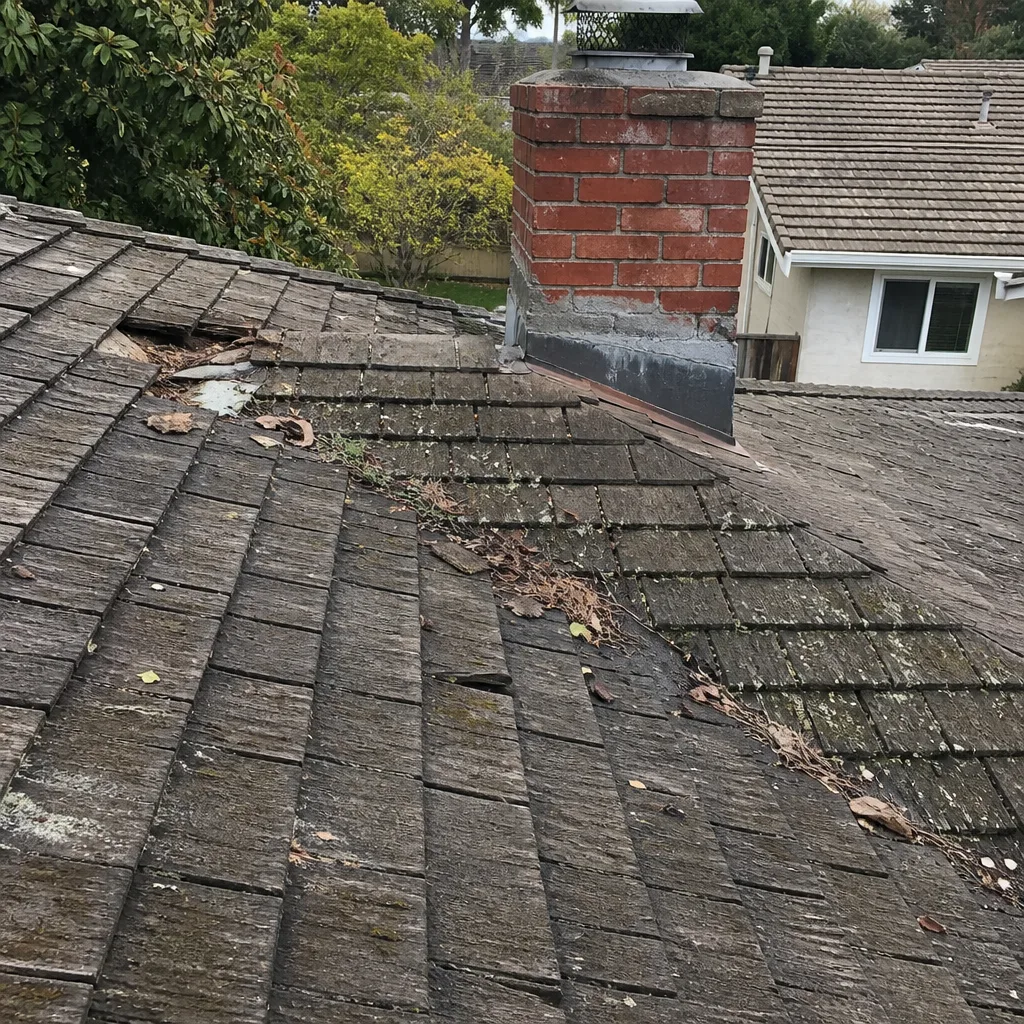 Before
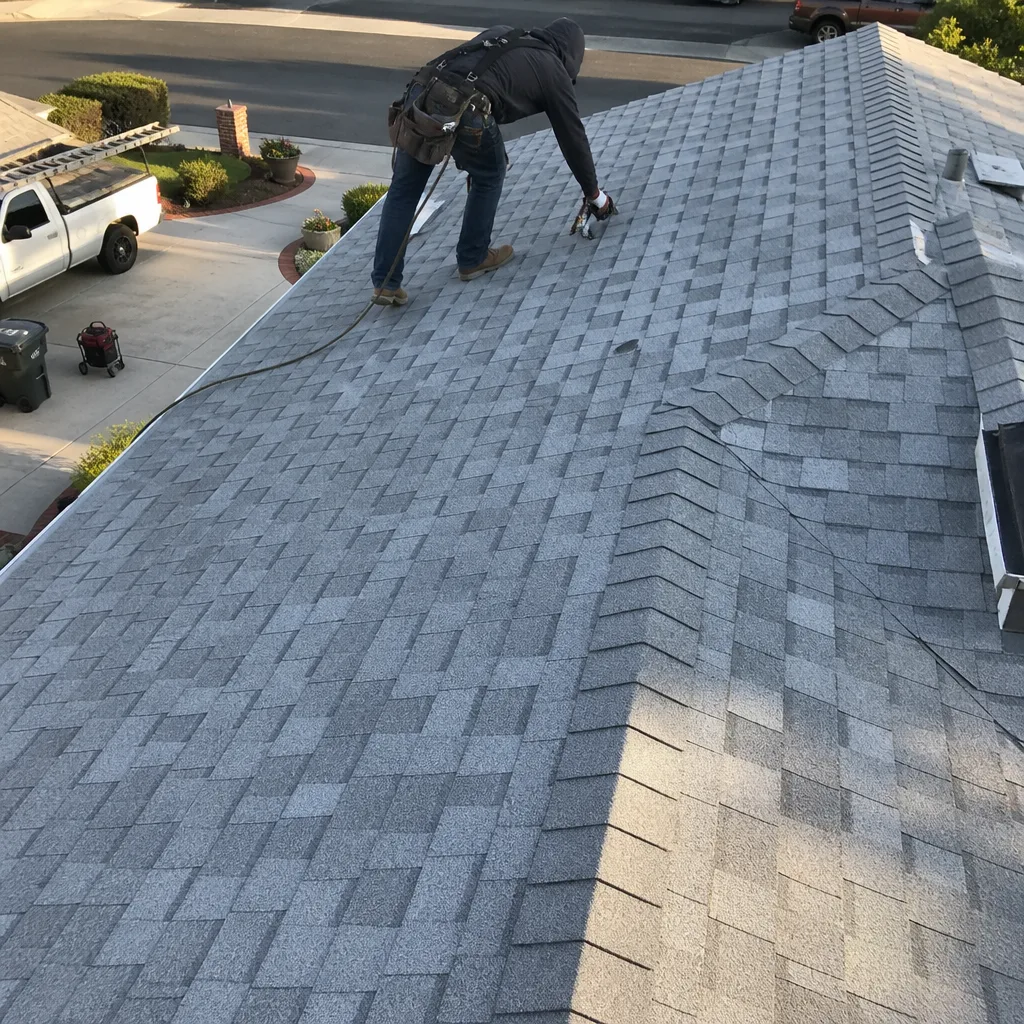 After
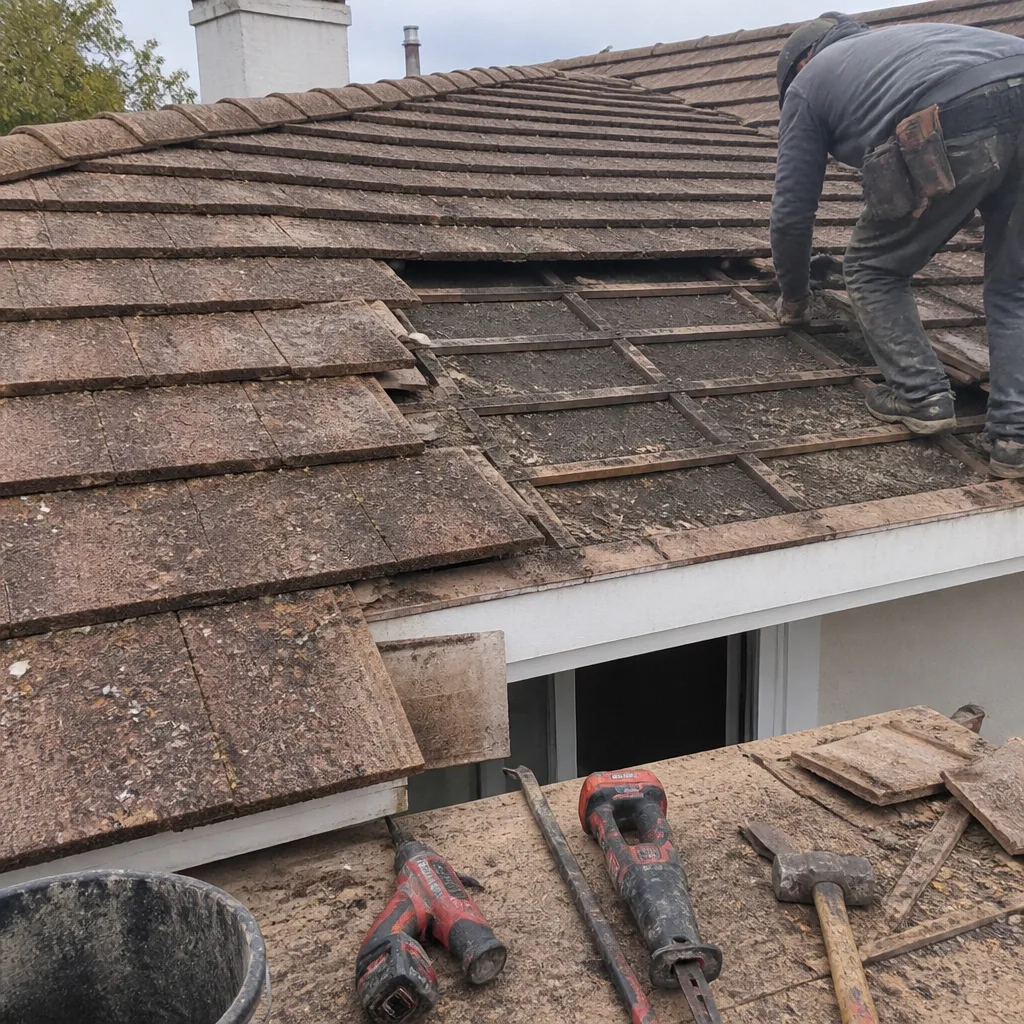 Before
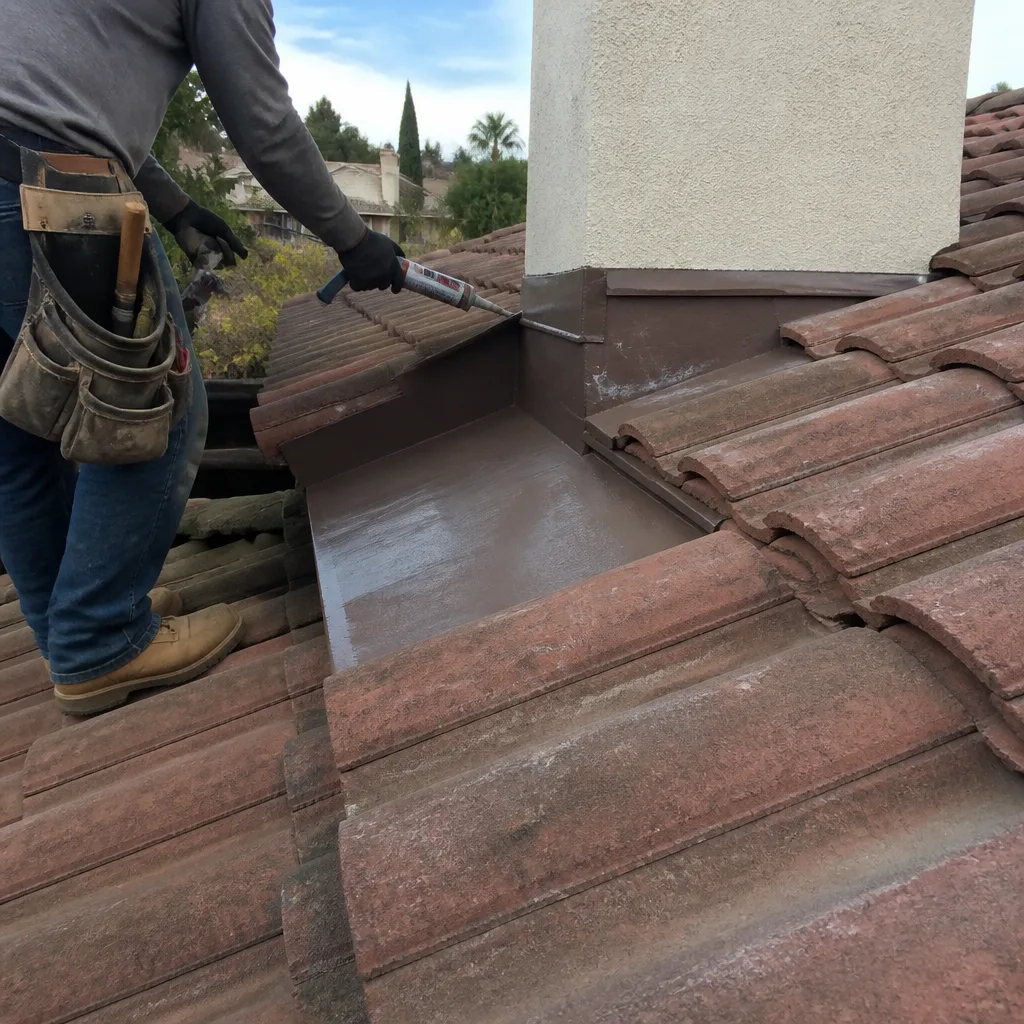 After
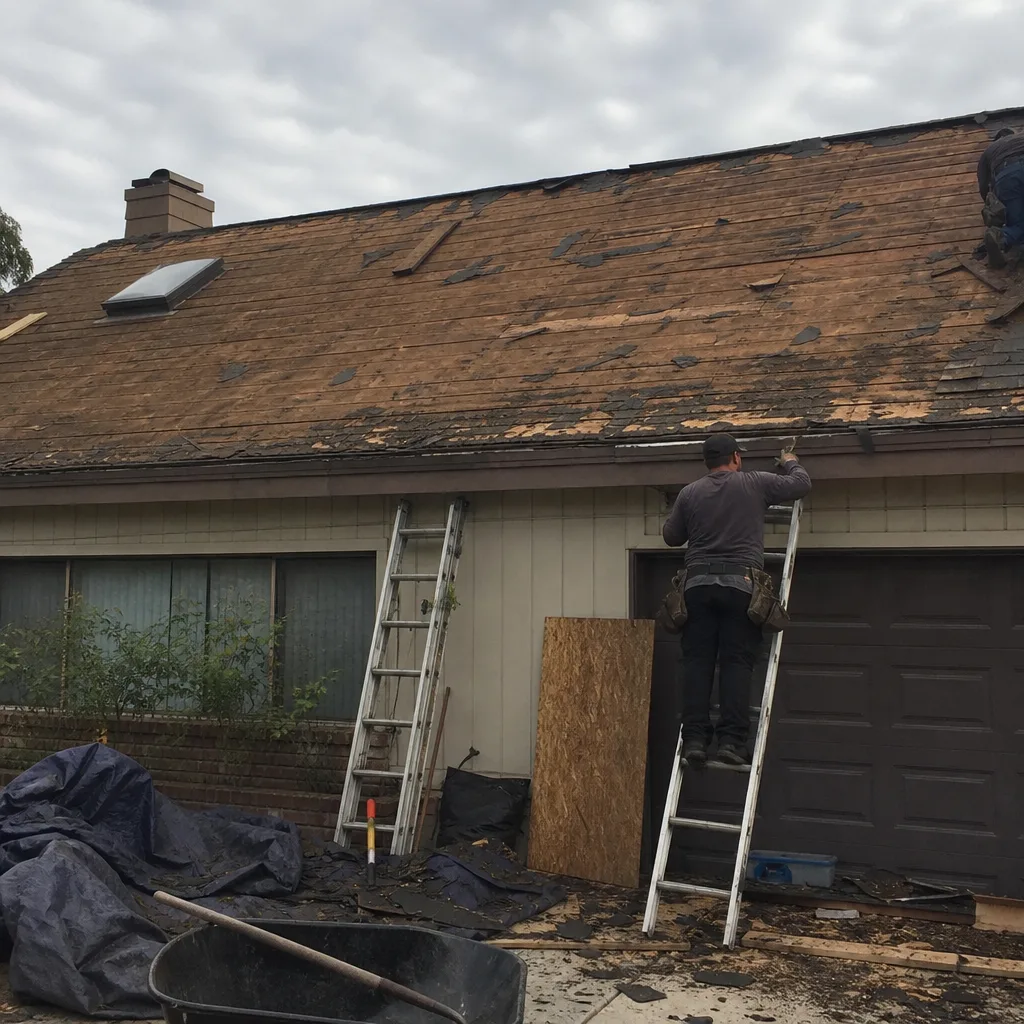 Before
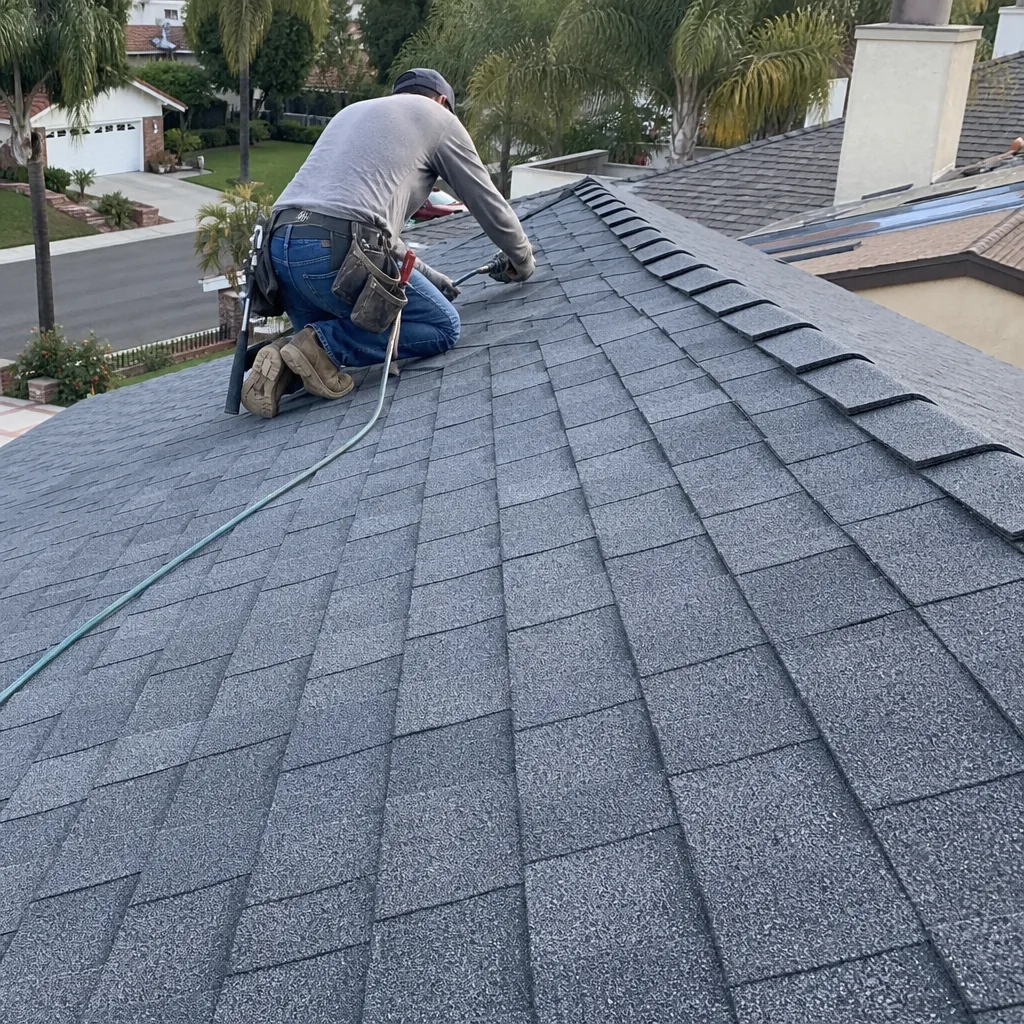 After
When to Call a Professional
You should call a professional the moment you see water staining on a ceiling, shingles in the yard after a windstorm, or granule buildup in your gutters. These are all signs that the roof’s protective surface is failing, and waiting turns a $600 repair into a $4,000 deck replacement. For older roofs – 15+ years in Yorba Linda’s sun and Santa Ana winds – an annual inspection is worth the money even without visible symptoms. If you’re preparing to sell, a documented inspection and minor repairs can head off buyer objections before they become deal-breakers. Weston Roof Repair offers free estimates in Yorba Linda for repairs and replacements, and our homepage has the full scope of what we do. Call (833) 589-6925 to schedule yours.
Frequently Asked Questions
A full roof replacement in Yorba Linda in 2026 typically costs $11,500 – $38,000 depending on home size, roof complexity, material choice, and fire-zone requirements. The median falls around $19,000 – $24,000 for a standard 2,400-square-foot home with architectural shingles. For an exact quote on your roof, call (833) 589-6925 – estimates are free.
Minor repairs – a few missing shingles, a torn boot at a pipe penetration, a small valley patch – run $450 – $1,200 in Yorba Linda. Mid-range repairs like replacing a section of damaged flashing, rebuilding a valley, or fixing a chimney saddle run $1,200 – $3,500. The final number depends on access difficulty and the extent of hidden damage. Call (833) 589-6925 for a repair estimate based on what we actually find in the inspection.
Not everywhere, but much of Yorba Linda sits in a Wildland-Urban Interface zone where Class A assemblies are required for new roofs and significant reroofs. Hillside areas east of Fairmont Boulevard and up into Bryant Ranch carry the strictest requirements. Tile and standing seam metal are Class A by material. Shingles can achieve Class A with fire-rated underlayment. Verify your specific tract with the city’s Building & Safety Division before choosing materials.
A standard shingle reroof on a Yorba Linda home takes 2 – 4 days for the crew on site, with 1 – 3 weeks total elapsed time including permit processing, material delivery, and inspections. Tile roofs run longer, typically 5 – 10 days on site, because the tile work is slower and the inspection schedule is more involved. Your exact timeline depends on roof complexity and the city’s current permit queue.
If the roof is under 15 years old and the damage is localized – a leak around one flashing point, wind damage on one slope, a few cracked tiles – repair is almost always the right call. If the roof is 20+ years old, the underlayment is failing, or you’re seeing leaks in multiple rooms, replacement starts to make more economic sense. The only way to know is a proper inspection. Weston Roof Repair lists roof repair as our first service for a reason: we’d rather fix what’s fixable than sell you a roof you don’t need.
Quotes vary because scope assumptions vary. Two contractors bidding the same house can be $8,000 apart if one includes two-layer tear-off, new flashing throughout, Class A underlayment, ember-resistant vents, and a manufacturer-certified installation, while the other assumes single-layer tear-off, reuses flashing, and quotes basic felt. The variance is rarely material markup. It’s scope. Get every quote line-itemed and compare categories, not totals. For more guides & resources on protecting your home, explore our blog.
The Bottom Line
A roofing quote in Yorba Linda is only as useful as the line items behind it. The number on the bottom means nothing without knowing what’s in and what’s out: tear-off layers, underlayment grade, flashing replacement, fire-zone compliance, manufacturer certification, and permit costs. Yorba Linda’s WUI designation makes material choices more consequential than in surrounding cities, and the difference between a lift-and-relay and a full tile replacement is $20,000 or more. Get inspected before you get quoted. Compare line items, not totals. Check permit records on comparable homes. And when you’re ready to talk numbers, we’ll show you exactly what’s inside them.
Weston Roof Repair offers free estimates in Yorba Linda. Call (833) 589-6925 to schedule yours.
Written by the team at Weston Roof Repair, serving Yorba Linda since 2015.