Last updated October 30, 2026
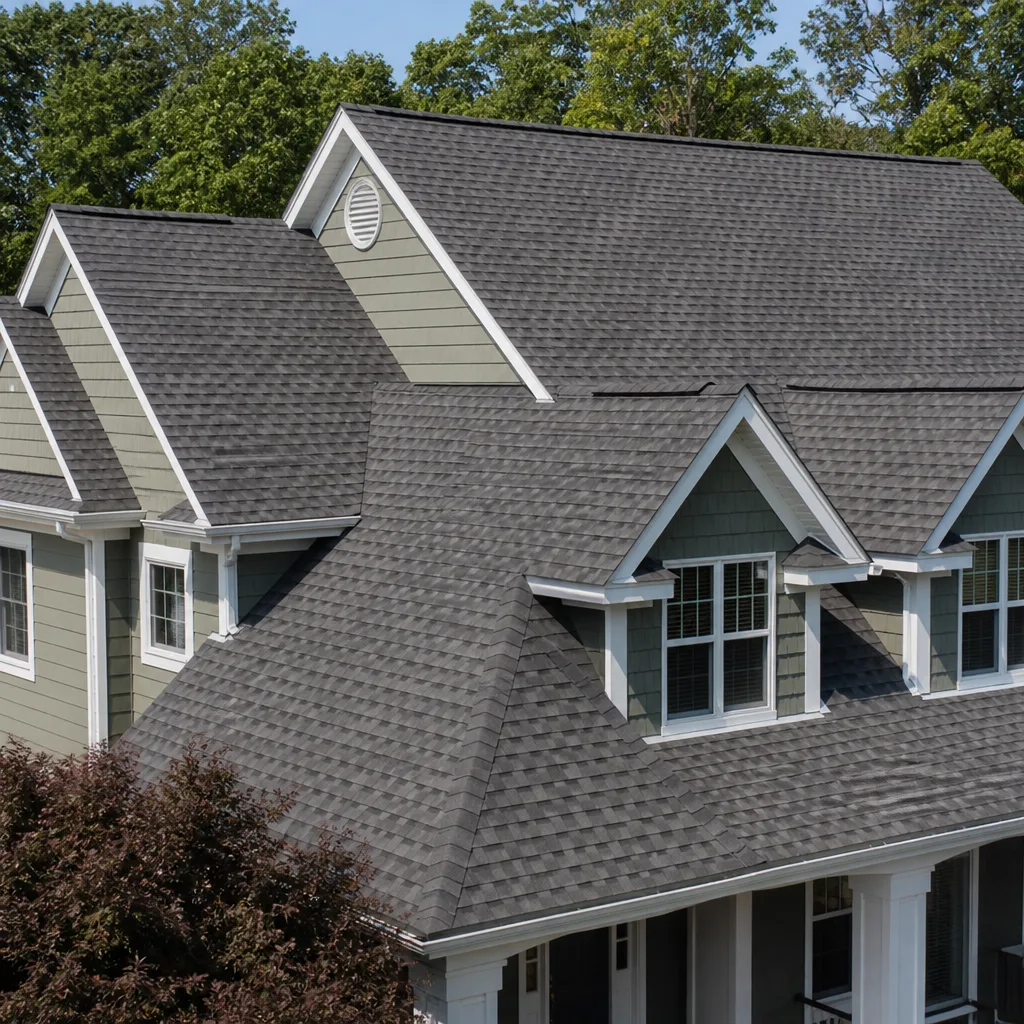 Architectural shingles
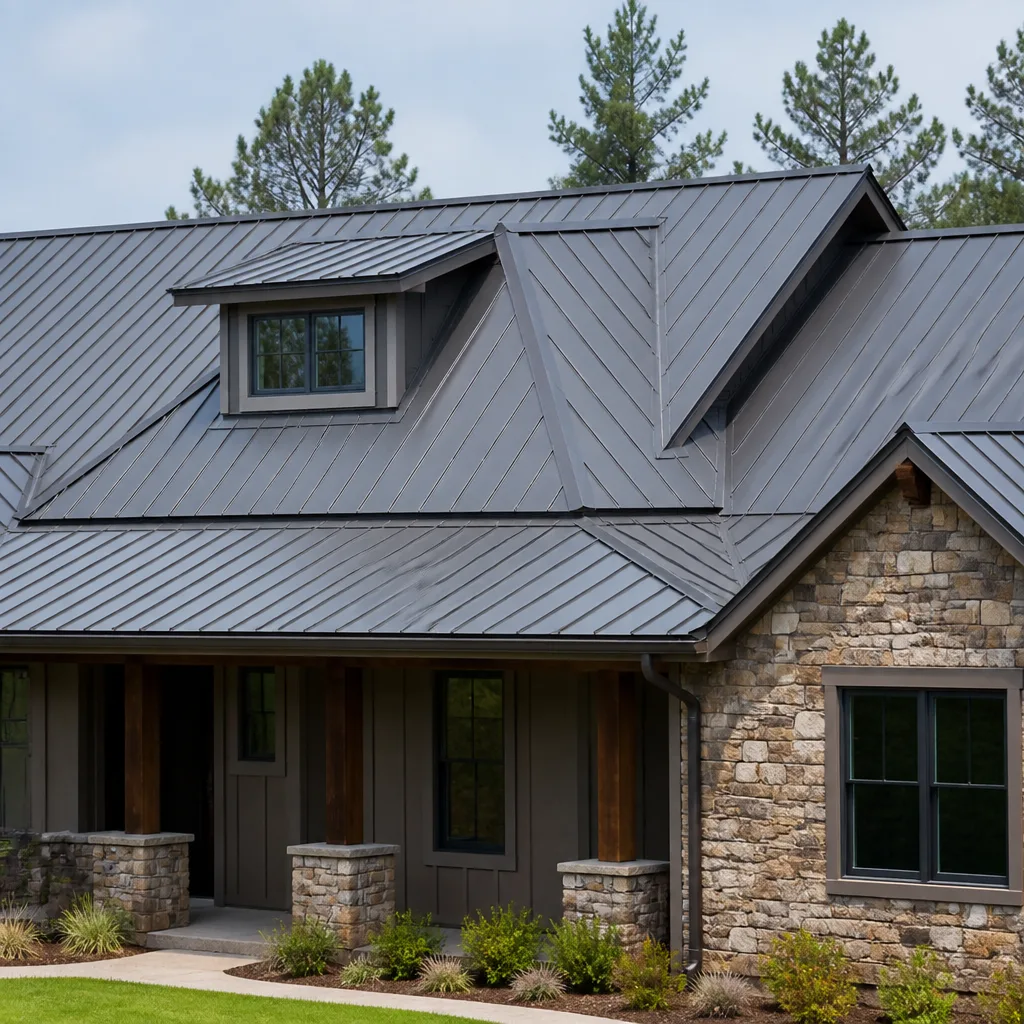 Metal roofing
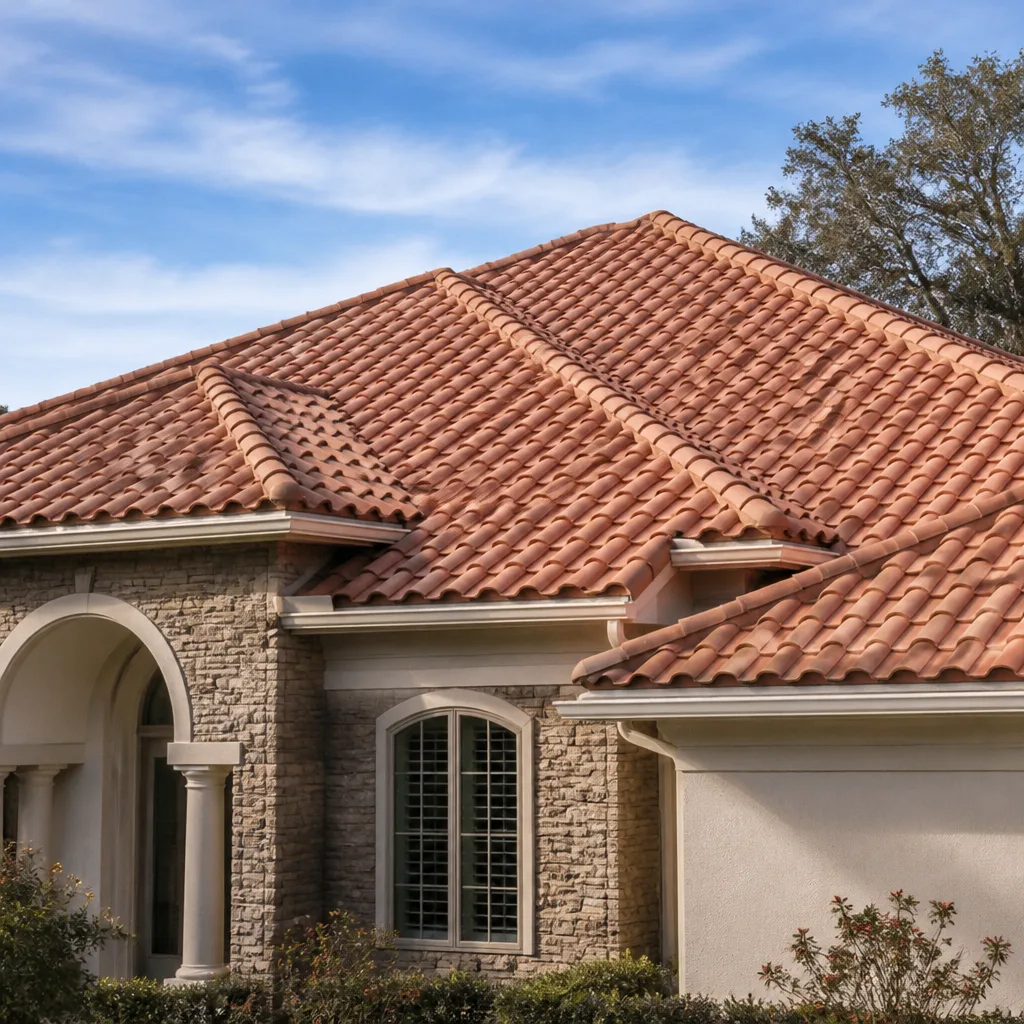 Tile roofing
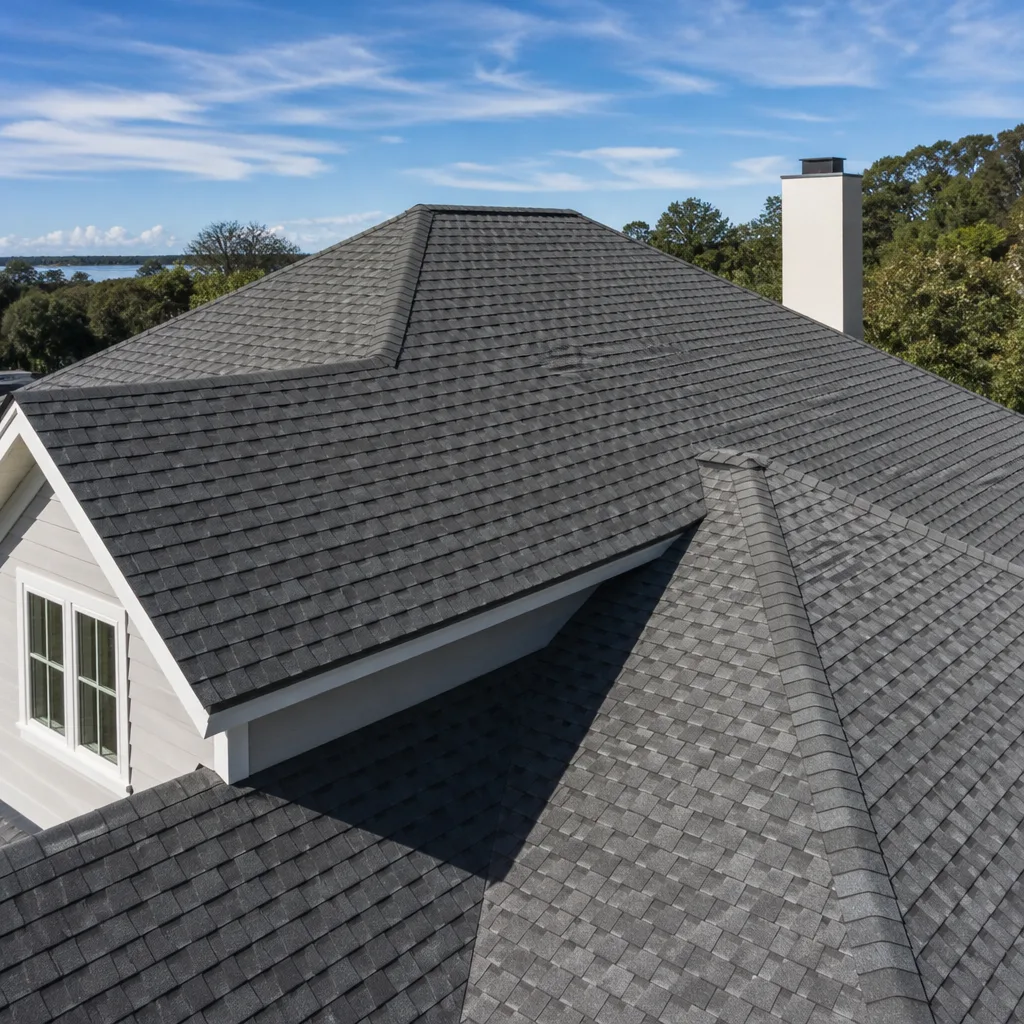 GAF
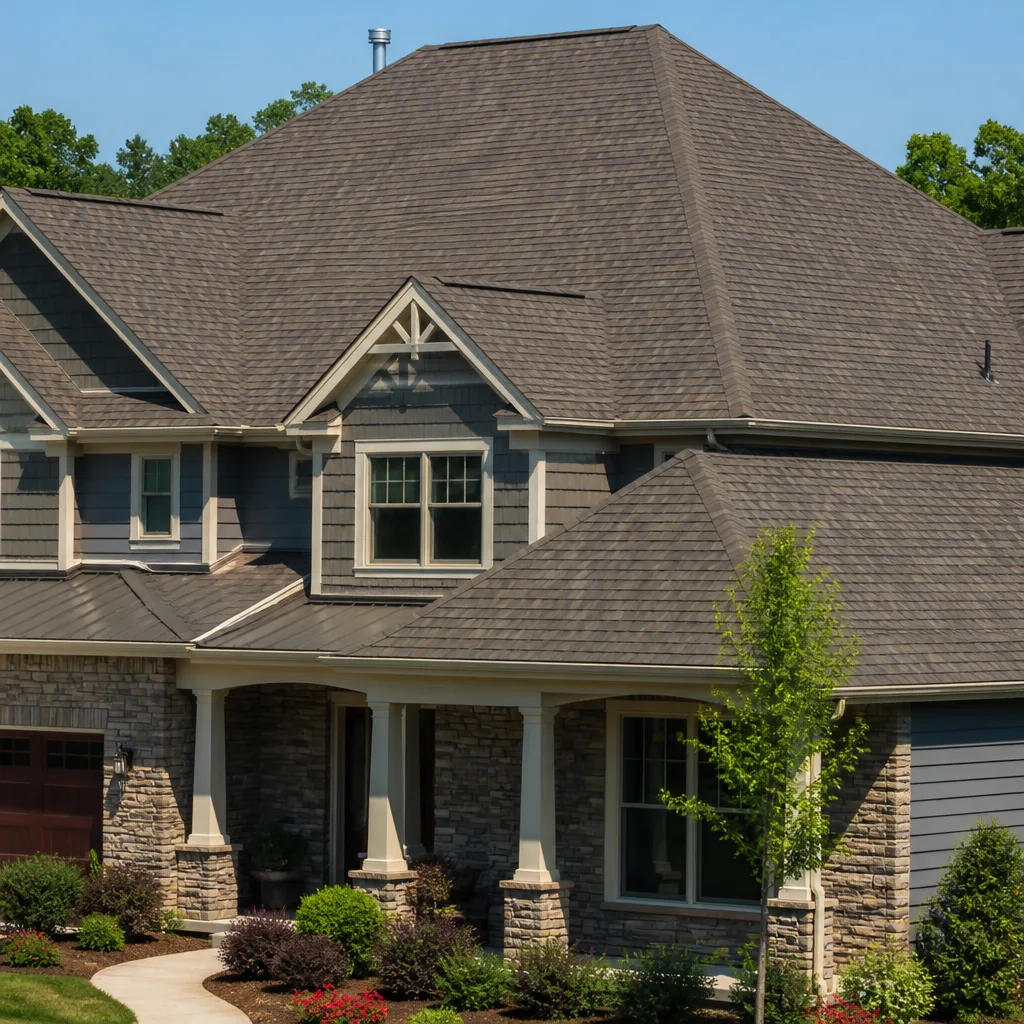 Owens Corning
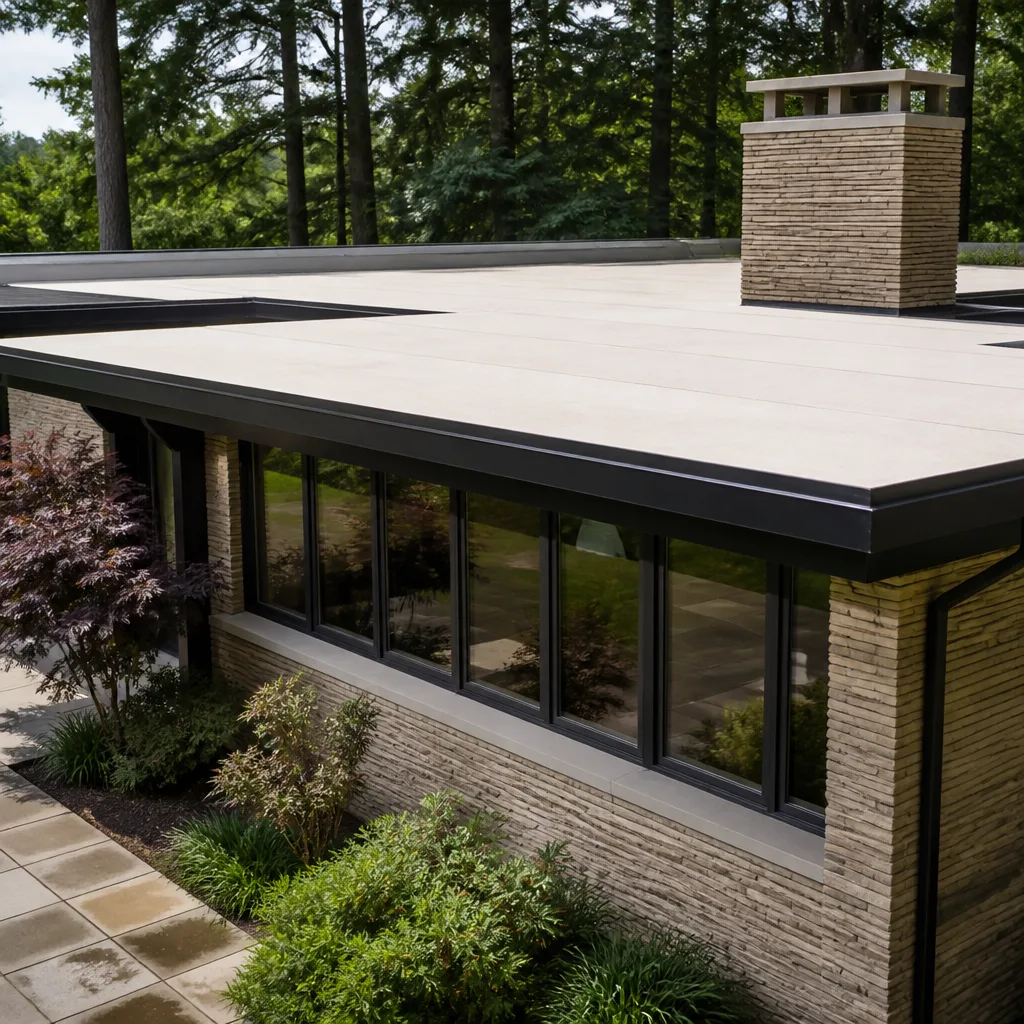 Flat & low-slope
Free roof inspection with deck photos before we talk money - GAF and Owens Corning certified installation
The Complete Roof Repair Guide for Yorba Linda Homeowners
Yorba Linda gets more than 280 sunny days a year. That sounds pleasant until you understand what it does to a roof. That much UV exposure degrades asphalt shingles roughly 30% faster than what you’d see in coastal Orange County cities like Newport or Huntington Beach. Yet most roof repair guides read like they were written for Seattle or Atlanta. This one isn’t. We’re going to walk through how Yorba Linda’s specific climate, the heat, the Santa Anas, the sudden downpours on baked-dry roofing, creates predictable failure patterns. And more importantly, how to fix them correctly the first time.
Quick Answer
Roof repair in Yorba Linda is driven by three local forces: intense UV exposure that accelerates granule loss and cracking, Santa Ana wind events that tear at ridge caps and hip shingles, and rare but concentrated rain that exploits every weakness the dry heat has already created. Most repairs fall into three categories: isolated shingle replacement, flashing repair, or localized underlayment work. The right fix depends on your roof’s age, material, and the pattern of damage, not on what a salesperson wants to sell you. Start with an inspection. If a repair fixes it, that’s what we’ll tell you.
Styles & brands we work with
Table of Contents
- How Yorba Linda’s Climate Damages Roofs Differently
- Damage Triage: Repair vs. Partial Re-Roof vs. Full Replacement
- Material-by-Material Repair Guide for Yorba Linda
- What to Inspect After Every Santa Ana Wind Event
- Signs You Need Roof Repair Now (Not Later)
- What Roof Repair Costs in Yorba Linda
- Permits and HOA Considerations in Yorba Linda
- Common Mistakes to Avoid
- When to Call a Professional
- Frequently Asked Questions
How Yorba Linda’s Climate Damages Roofs Differently
Most roofing problems in Yorba Linda start with heat, not rain. The sun beats down on your roof for nearly 300 days a year, and inland Orange County temperatures routinely push into the mid-90s from July through September. Your roof surface gets hotter than that. A typical asphalt shingle on a 95-degree day can hit 140 to 160 degrees Fahrenheit.
That heat does two things. First, it accelerates the loss of the ceramic granules that protect asphalt shingles from UV radiation. Those granules are the shingle’s sunscreen. Once they start washing into your gutters, the asphalt underneath bakes, hardens, and cracks. Second, the daily thermal cycle, hot afternoon, cool night, causes roofing materials to expand and contract. Over a decade, that constant movement loosens nails, opens seams, and separates flashing from the roof deck.
Then the Santa Anas arrive. In Yorba Linda, the fall winds come down through the Santa Ana Canyon and hit the hillside neighborhoods hard. We’ve seen ridge caps lifted clean off homes in Bryant Ranch and Vista del Verde after a single strong event. The wind finds the edge of every shingle, every ridge cap, every hip. If the thermal cycling has already loosened the nails, the wind does the rest.
Rain in Yorba Linda is a different story than rain in the Pacific Northwest. It comes in short, intense bursts, often after months of zero precipitation. The roof has been drying, shrinking, and developing hairline cracks for six months. Then a storm drops an inch of water in three hours. That water finds every gap the heat created. We don’t get roof failures because of rain alone. We get failures because rain exposes what the UV and thermal stress already broke.
This is why a generic roof repair guide doesn’t serve Yorba Linda homeowners. The advice about moss growth, ice dams, and snow load is irrelevant here. Your roof has a different set of enemies. Understanding that changes how you approach every repair decision.
Damage Triage: Repair vs. Partial Re-Roof vs. Full Replacement
Here’s the question every homeowner wants answered: can this be repaired, or do I need a new roof? The honest answer depends on three factors, and none of them require a sales pitch.
Factor 1: Roof Age
In Yorba Linda’s heat, asphalt shingle roofs have a realistic service life of 20 to 25 years, even when manufacturers rate them for 30 or more. The UV load here simply consumes shingles faster than the national average the warranty calculations assume. A roof that’s 10 years old with localized damage is almost always a repair candidate. A roof that’s 22 years old with multiple problem areas is probably approaching replacement territory, and spending repair money on it is throwing good money after bad.
Factor 2: Material Type
Concrete tile, which you see on many Yorba Linda homes, especially in the older hillside developments, can last 50 years or more. The underlayment beneath it, however, typically fails at 20 to 30 years. So a tile roof with leaking but intact tiles usually needs underlayment replacement, not a full re-roof. Flat roof sections with TPO or modified bitumen have their own lifespan: 15 to 20 years in this heat, plus vulnerabilities at seams and penetrations.
Factor 3: Damage Pattern
This is where experience matters. An isolated leak near a chimney, a pipe boot, a valley, or a specific row of shingles is a repair. Widespread granule loss across multiple slopes, shingles that are brittle and cracked everywhere you look, or leaks appearing in several rooms simultaneously indicate systemic failure. A partial re-roof might address one severely damaged slope while preserving a healthier section, but be honest: partial re-roofs on asphalt shingles create seams, and seams create future vulnerability. Sometimes they’re the right call. Sometimes they’re a stopgap.
Here’s a practical triage sequence we use with every inspection in Yorba Linda:
- Determine the roof’s age and material. This sets the realistic remaining lifespan expectation.
- Locate every active or past leak. Water travels, so the interior stain isn’t always where the roof failure is.
- Assess the scope of visible exterior damage. How many shingles are cracked, cupped, or missing? How much granule loss shows in the gutters?
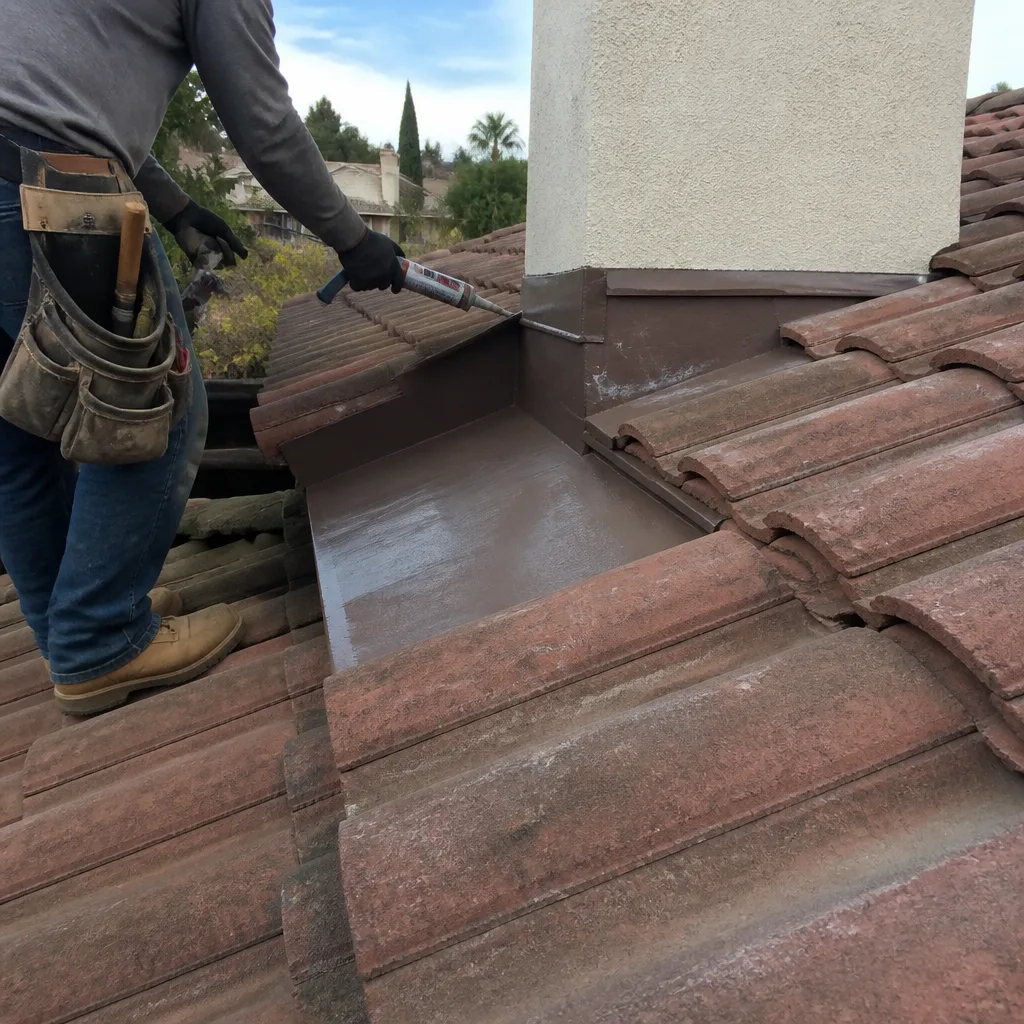
- Check the flashing. Most leaks we find in Yorba Linda are flashing failures, not shingle failures. Chimneys, skylights, pipe boots, and wall intersections are the usual suspects.
- Make a recommendation based on the data, not on gut feel. If a repair addresses the problem and the roof has meaningful life left, repair. If the roof is failing broadly, replacement is the honest answer.
We’ll inspect it first. If a repair fixes it, that’s what we’ll tell you. The goal is an informed decision, not a financed project. For more guides & resources, explore our blog.
Material-by-Material Repair Guide for Yorba Linda
Roof repair looks different depending on what’s on your roof. Yorba Linda has a mix of housing stock, from 1960s single-story ranch homes to newer developments with modern materials. Here’s the breakdown.
Asphalt Shingle Repair
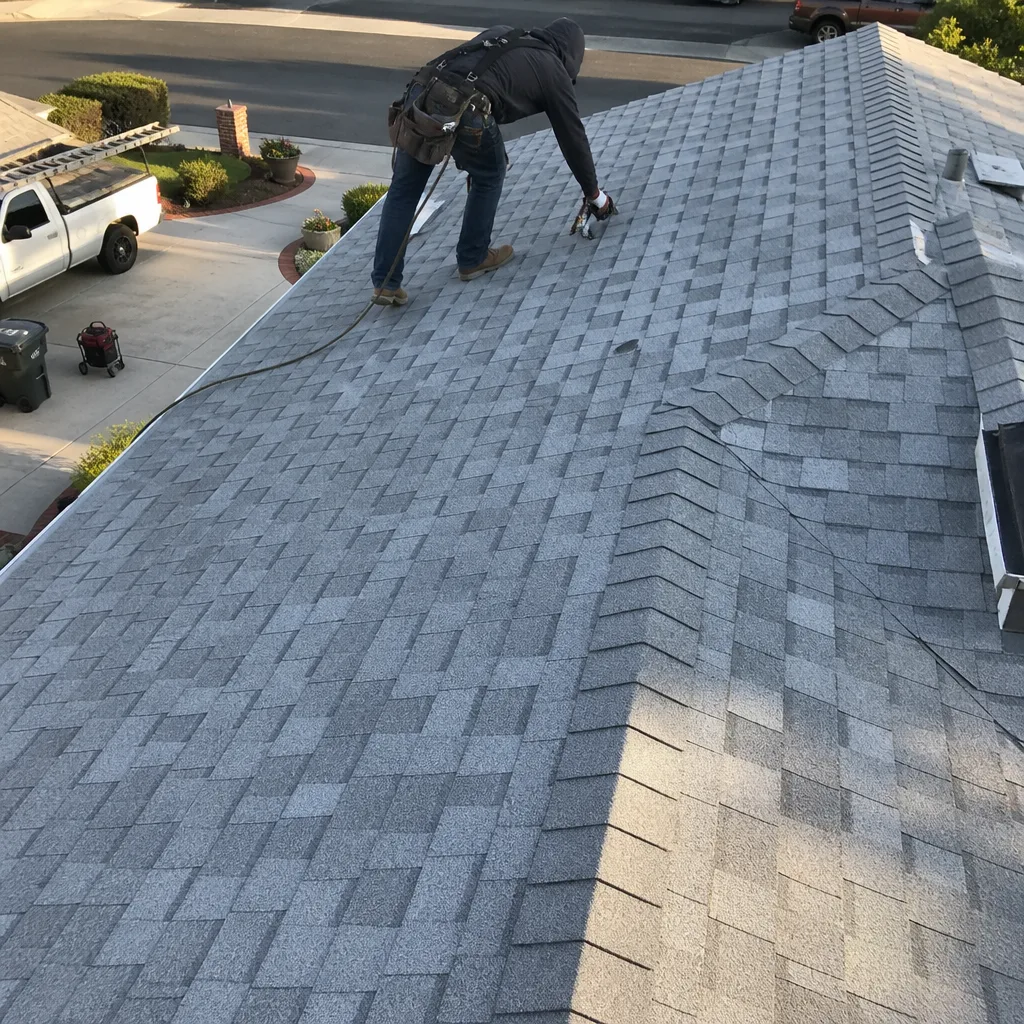
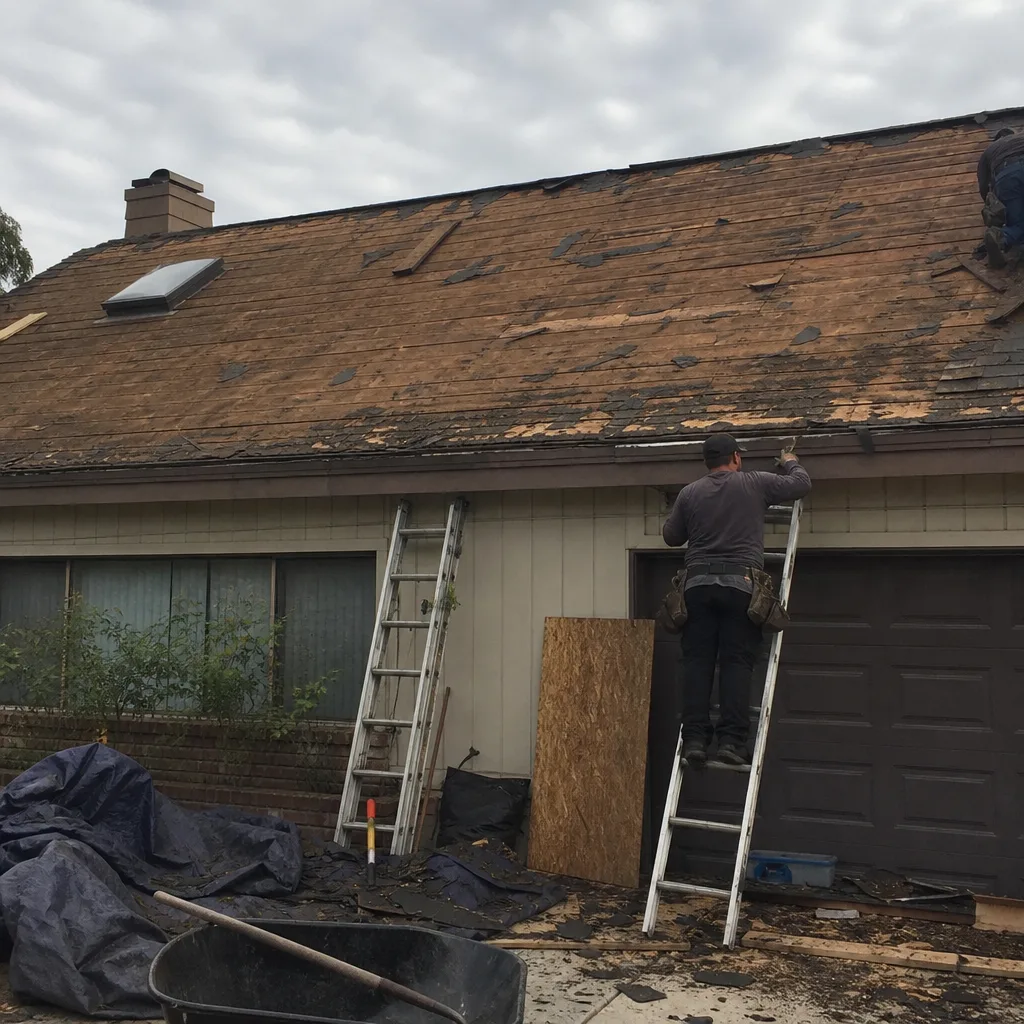
Asphalt shingles are the most common roofing material in Yorba Linda, and they take the worst beating from the inland sun. Repair usually means replacing individual damaged shingles, which is straightforward when the shingle is flexible enough to lift without cracking. After 15 years in this heat, shingles get brittle. A repair on an older roof often causes more damage than it fixes, which is why experienced roofers hesitate before committing to repairs on aging shingle roofs.
When we repair asphalt shingles, we look at the cause, not just the symptom. If a single shingle is damaged from a falling branch, replacement is simple. If you’re losing granules across the roof surface, that’s UV degradation, and no amount of individual shingle replacement fixes the underlying issue. In that case, you need to understand the remaining lifespan and plan accordingly.
We work with Atlas, Tamko, and other leading manufacturers, so when we do a repair or partial re-roof, we can match materials more precisely than a single-brand contractor. That matters more than you’d think: mismatched shingle colors or styles on a visible slope look bad and can affect resale value.
Concrete Tile Repair
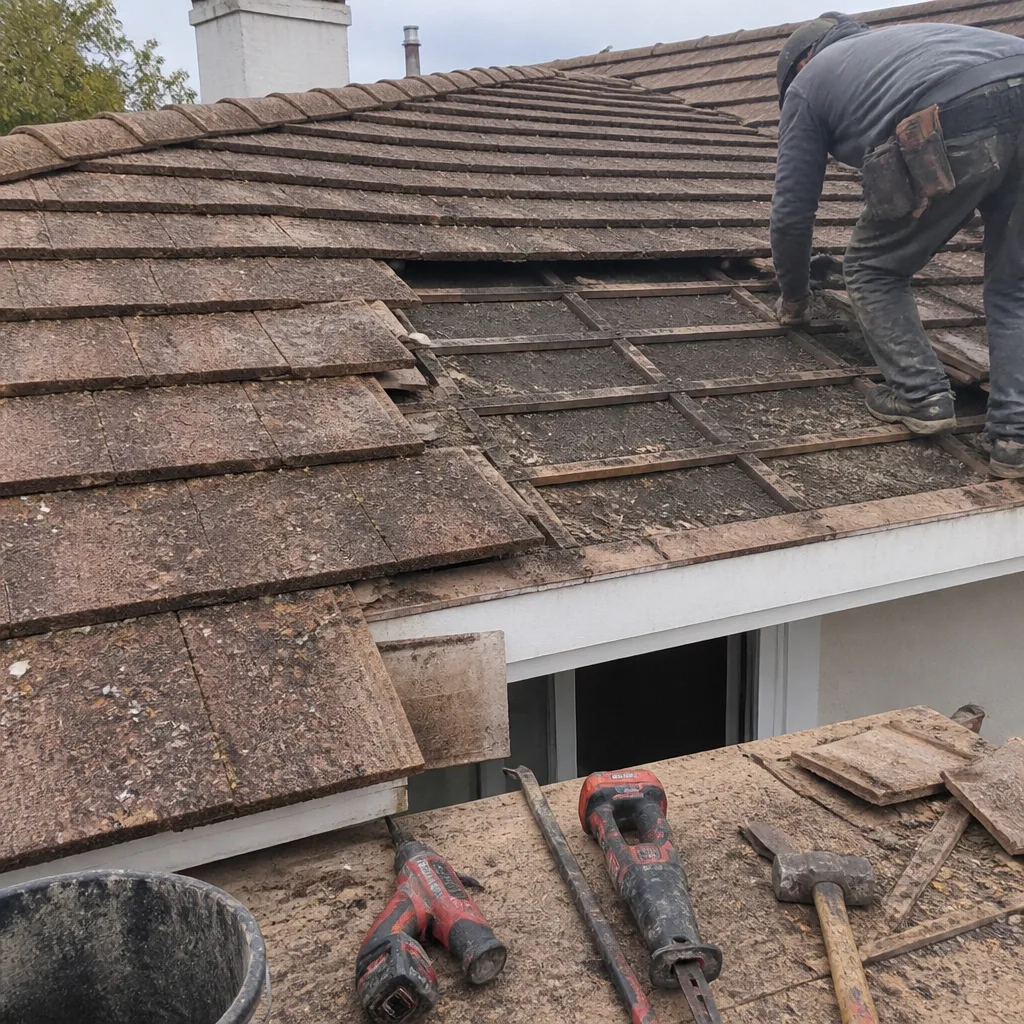
Concrete tile is everywhere in Yorba Linda, especially in the older neighborhoods and hillside communities. Tile itself is durable in this climate, it doesn’t suffer the same UV degradation as asphalt. The problems happen underneath. The underlayment, the waterproof barrier beneath the tile, breaks down over time. By year 25, most underlayment is failing, even if the tile looks fine from the street.
Tile repair is delicate work. Walking on tile roofs requires care, and breakage is common when homeowners or inexperienced roofers try DIY fixes. Tile can also shift during Santa Ana events, creating gaps where water enters. A proper tile repair means removing the damaged tiles, replacing or patching the underlayment beneath them, then reinstalling or replacing the tiles.
Boral tile products are common in Yorba Linda, and we’re authorized to work with Boral along with six other manufacturers. That brand-neutral position means we recommend the product that fits your roof’s needs, not the one we’re contractually bound to promote.
Flat Roof and TPO Repair
Flat roof sections appear on some Yorba Linda homes, particularly mid-century modern designs and homes with room additions. These roofs face different challenges in our climate. Standing water, or ponding, after a rare heavy rain can sit on a flat roof and find every seam. The heat then accelerates the breakdown of TPO membranes, which is why flat roof seams and penetrations are the most common leak sources we see.
Flat roof repair usually involves patching seams, resealing penetrations, or replacing a section of damaged membrane. These repairs are effective when the roof is young enough to justify them. On an older flat roof, patching is a band-aid, and you need an honest assessment of the remaining service life.
What to Inspect After Every Santa Ana Wind Event
Santa Ana winds are Yorba Linda’s most damaging weather phenomenon. When the winds come through the canyon, they gust hard enough to tear shingles, lift ridge caps, and send tree branches onto roofs. After every major wind event, here’s what we tell homeowners to look for:
- Walk the perimeter of your home. Look for shingles, tile pieces, or roofing material in the yard or on the ground.
- Check the ridge line. The ridge cap is the first thing to go in high wind. Look for missing, cracked, or shifted ridge caps.
- Inspect the hips. Hip shingles face wind from multiple directions and are vulnerable, especially on two-story homes in exposed hilltop locations.
- Look at the edges. Wind gets under shingles at the eaves and rakes, lifting them over time.
- Check flashings. Wind-driven debris can dent or dislodge flashing around chimneys and vents.
- Look inside the attic. If you have access, check for signs of water intrusion after the next rain. Wind damage often doesn’t leak immediately.
If you find damage, document it before it rains. Wind-lifted shingles that don’t leak during dry weather become active leaks during the first winter storm. A quick repair now is cheaper than water damage later. Our Roof Inspection in Yorba Linda service is built exactly for this kind of post-wind assessment, a diagnostic check that tells you what’s damaged, what’s vulnerable, and what can wait.
Signs You Need Roof Repair Now (Not Later)
Some roof problems announce themselves. Others are quiet until they’re expensive. Here are the signs that should trigger a closer look, whether you’re seeing them today or after the next storm rolls through Yorba Linda.
Water stains on ceilings or walls. This is the obvious one, but the location matters. A stain directly below a roof penetration suggests a localized problem. Stains in multiple rooms or on different floors suggest widespread failure.
Granules in the gutters. Some granule loss is normal. A constant stream of granules every time you clean the gutters means the shingles are failing. In Yorba Linda’s UV environment, this happens faster than homeowners expect.
Curling or cupping shingles. Heat makes shingles curl, especially on south-facing slopes that get the most direct sun. Curling shingles are vulnerable to wind uplift and are a warning sign of accelerated aging.
Loose or missing flashing. Flashing is the most common source of roof leaks, period. Around chimneys, skylights, vents, and walls, flashing failures are responsible for more water intrusion in Yorba Linda homes than any other single cause.
Interior attic moisture or mold. A roof leak doesn’t always show on the ceiling. Sometimes it shows as moisture in the attic, musty smells, or visible mold on the underside of the roof deck.
Higher energy bills. A failing roof lets heat in during summer and conditioned air out. If your cooling costs are climbing without an obvious reason, your roof’s ventilation and insulation layer might be compromised.
None of these signs automatically means a full replacement. But all of them deserve a professional look. The right response to “is this a problem” is almost always “let’s find out.” A roof inspection shouldn’t be a sales pitch, it should be a diagnosis.
What Roof Repair Costs in Yorba Linda
Repair pricing varies by scope, material, and access, but here are realistic ranges for the Yorba Linda market, based on what we see across repair jobs in the area:
- Minor asphalt shingle repair (fewer than 10 shingles): $350 to $650
- Isolated flashing repair (vent, pipe boot, or small chimney area): $400 to $900
- Extensive flashing replacement (multiple penetrations or chimney work): $800 to $2,000
- Tile repair including underlayment patch (small area): $500 to $1,200
- Flat roof seam or membrane repair: $450 to $1,500
- Post-storm repair with multiple damaged areas: $1,000 to $3,500
- Partial re-roof of a single slope or section: $3,000 to $8,000, depending on material and size
These are estimates, not quotes. Every roof is different, and access, slope, and material availability all affect the final number. What we can tell you is this: a repair that costs $800 today usually prevents a leak that costs $4,000 in drywall, insulation, and mold remediation later. The math usually favors early action.
We give written line-item estimates before any work begins. You’ll know exactly what’s being done and what it costs. No change orders, no surprises when the crew shows up. Call (833) 589-6925 to schedule your free estimate.
Permits and HOA Considerations in Yorba Linda
Roof repair in Yorba Linda is generally treated as a maintenance activity, not new construction, so most repairs don’t require a city building permit. The City of Yorba Linda’s building department focuses permit requirements on structural changes and complete re-roofs. If you’re replacing a few shingles or fixing a flashing, you typically don’t need to pull a permit.
A complete roof replacement in Yorba Linda does require a permit. The city wants to verify that the new roof meets current building codes, including the California energy efficiency standards that apply to roofing materials. This is standard, and a reputable roofer handles it as part of the job. If you’re working with Roof Repair in Yorba Linda, ask whether the scope of work triggers a permit requirement. We’ll tell you straight.
HOA requirements are a different layer. Yorba Linda has many HOA-governed communities, and some have rules about roofing materials and colors. If your home is in an HOA, check your CC&Rs before any repair or replacement. Some communities require specific tile profiles or shingle colors to maintain aesthetic consistency. This matters for two reasons: first, you don’t want to complete a repair and then get a notice from the HOA. Second, the material restrictions may affect whether a repair or replacement is the better option. If the HOA requires a discontinued tile profile, for instance, a full replacement might involve finding matching salvage tiles or going through an architectural review process.
A roofer who works with multiple manufacturers has an advantage here, because we’re not locked into a single product line when an HOA requires a specific material. Seven brands. One company. No pressure to pick what’s convenient for us.
Common Mistakes to Avoid
- Ignoring granule loss because the shingles “look fine.” Granule loss is the early-warning system for UV degradation in Yorba Linda. By the time shingles are visibly cracked, the roof is already compromised. Clean your gutters regularly and notice what’s in them.
- Caulking over flashing failure. We’ve seen homeowners and handymen try to seal a leaking flashing with caulk. It fails within a season. Flashing needs to be properly lifted, reset, and sealed, not gooped over. The heat in Yorba Linda hardens and cracks caulk quickly.
- Repairing an old roof without understanding the remaining lifespan. Spending $1,000 on repairs for a roof that needs replacement within two years is a waste. An honest roofer tells you this before you spend the money.
- Walking on a tile roof without experience. Broken tiles from improper foot traffic are among the most common tile roof problems we see. Tile roofs in Yorba Linda’s older neighborhoods are fragile after decades of thermal cycling. Don’t walk on them unless you know exactly how.
- Waiting until the next rain to address wind damage. Santa Ana season and rain season don’t overlap much, which means wind damage found in October might not leak until December or January. By then, the water has had months to find structural vulnerabilities. Fix wind damage when you find it.
- Choosing a roofer based solely on the lowest bid. Roof repair is not a commodity. A cheap repair that uses mismatched materials or skips the underlayment work costs more in the long run. Ask what’s included, what’s not, and why the recommendation is what it is.
When to Call a Professional
You can safely inspect your own roof from the ground. You cannot safely evaluate flashing condition, underlayment integrity, or subtle wind damage without getting onto the roof, and that’s where the risk starts. See our DIY vs Professional Roofing: The Yorba Linda Homeowner’s Decision Guide for a deeper look at when to call a pro. Roofs in Yorba Linda are steep, tile surfaces are fragile, and the heat makes shingles brittle at exactly the wrong moments.
Call a professional when you see active leaks, visible shingle or tile damage after a wind event, persistent granule loss, or any of the other warning signs in this guide. Call us when you’re not sure what you’re looking at and want an honest read. Weston Roof Repair offers free estimates in Yorba Linda, and our inspection process is separate from any sales recommendation. We’ll tell you what’s wrong, what it costs to fix, and what can wait. Contact us at (833) 589-6925.
Frequently Asked Questions
Most repairs take between 2 and 6 hours, depending on scope and material. A simple shingle replacement runs 2 hours. A complex flashing repair or tile underlayment patch can run most of a day. We schedule repairs so the work is completed the same day it starts, and we don’t leave roofs exposed overnight if there’s rain in the forecast. Call (833) 589-6925 for scheduling specifics.
Not necessarily. An asphalt shingle roof in Yorba Linda’s UV climate typically lasts 20 to 25 years, but that’s an average, not a guarantee. We’ve seen 25-year-old roofs in good condition and 15-year-old roofs that are failing. The material, installation quality, ventilation, and sun exposure all matter. A Roof Inspection in Yorba Linda gives you the data to make the decision without guessing.
Yes, in most cases. We work with Atlas, Tamko, and IKO, among other manufacturers, which means we have broader access to material matching than a single-brand contractor. Color matching after years of sun exposure is never perfect, but we get close. For tile roofs, we also work with Boral, which is common in Yorba Linda markets.
Leak repairs typically run $400 to $1,500, depending on the source. Flashing repairs around vents or pipe boots are on the lower end. Chimney flashing and valley work run higher. Tile roof leaks requiring underlayment replacement can exceed $1,000. We provide a written line-item estimate before work begins, so there are no surprises.
Most repairs don’t require a permit. The City of Yorba Linda treats localized repair as maintenance. A full Roof Replacement in Yorba Linda does require a permit, and we handle that as part of the replacement process. If you’re in an HOA, check your CC&Rs for material and color requirements before proceeding.
It depends on the timeline. If the roof has 5 or more years of service life left, a repair makes financial sense. If the roof is failing broadly and replacement is inevitable within 2 years, spending repair money is usually not the best allocation. An honest assessment starts with an inspection, not a sales conversation. That’s exactly what we offer.
The Bottom Line
Yorba Linda roofs fail in predictable ways. The sun, the wind, and the sudden rain work together to create a specific pattern of damage that generic roof guides miss. Understanding that pattern changes how you approach repairs: you act on granule loss before it becomes a leak, you inspect after every Santa Ana event, and you make repair-versus-replace decisions based on age, material, and damage scope, not on a contractor’s preference. From a single damaged shingle to a full tear-off, the right answer starts with an honest diagnosis. If you read nothing else from this guide, remember this: the cheapest repair is the one done before the leak starts.
Written by the team at Weston Roof Repair, serving Yorba Linda since 2015.
Ready to find out what your roof actually needs? Weston Roof Repair home offers free estimates across Yorba Linda. Call (833) 589-6925 to schedule yours.
See the difference
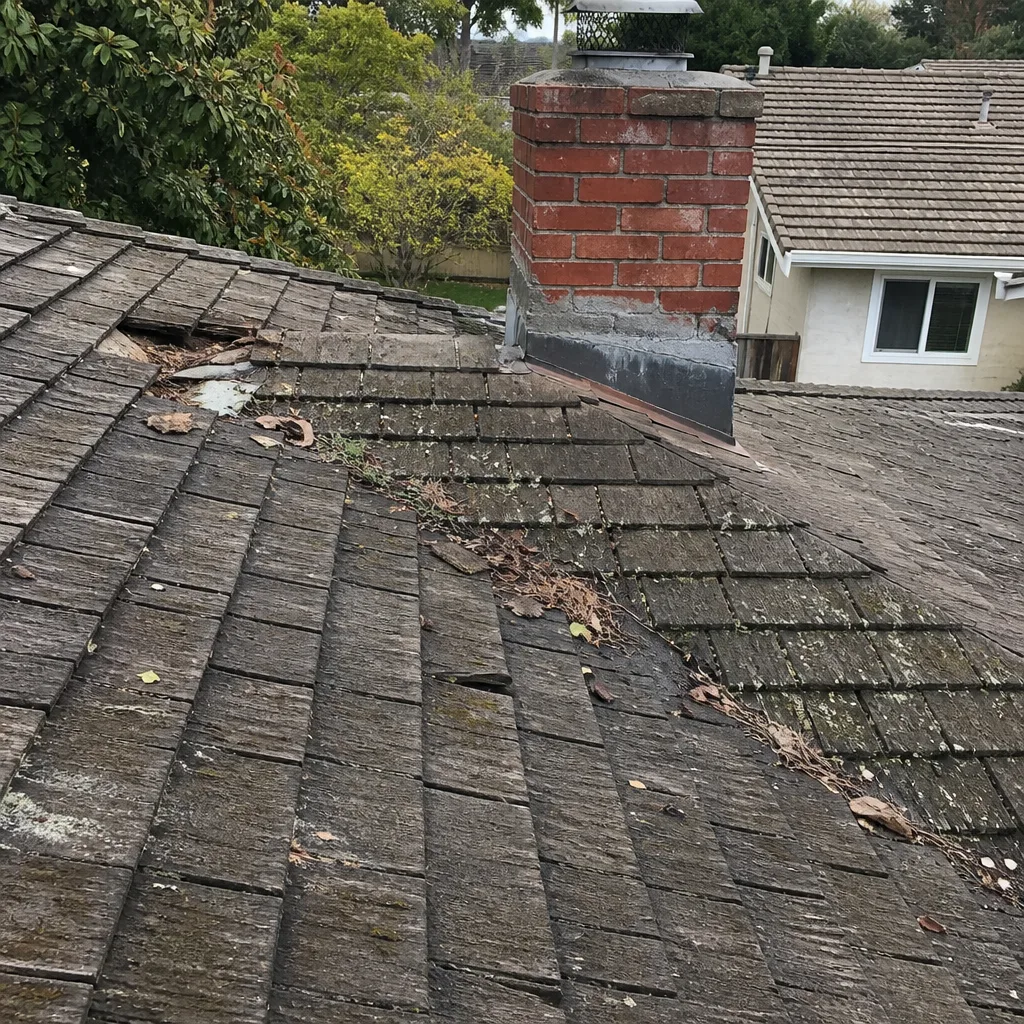 Before
 After
 Before
 After
 Before
 After