Last updated October 30, 2026
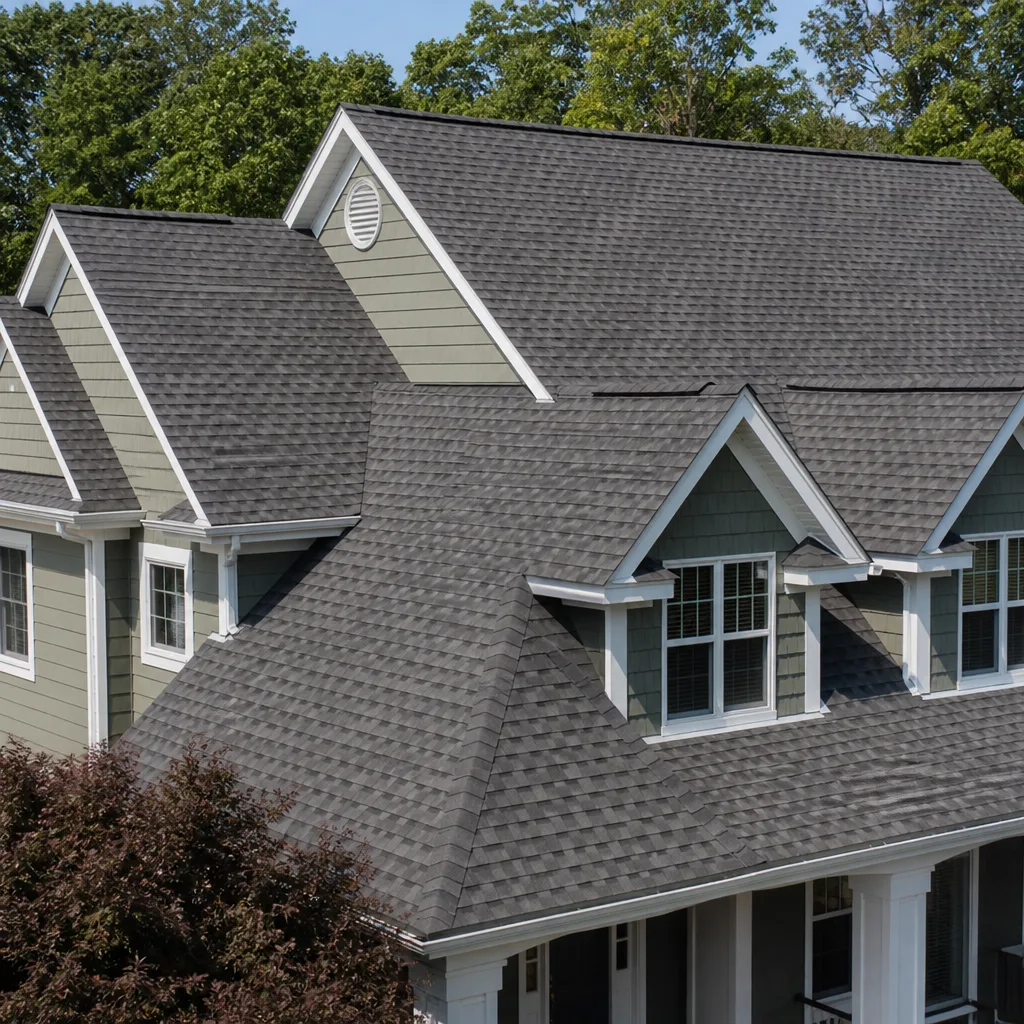 Architectural shingles
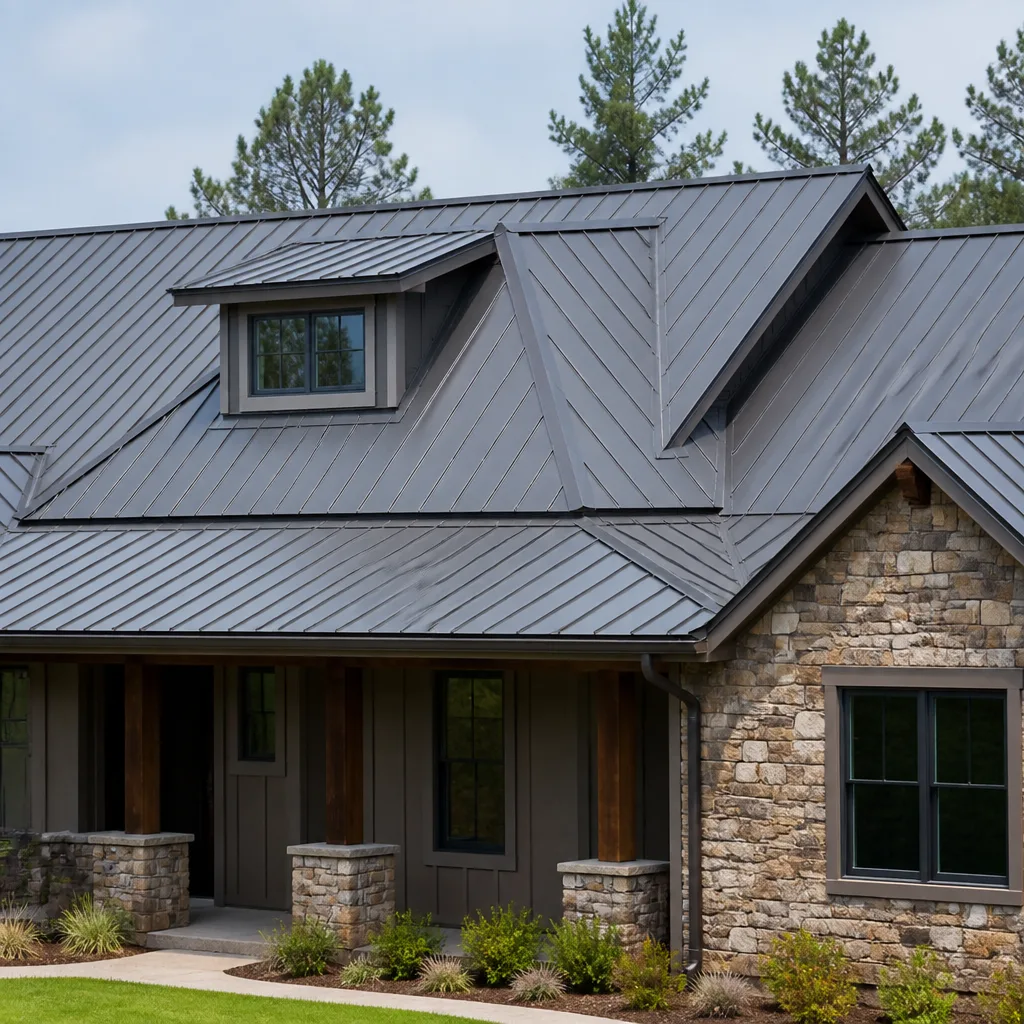 Metal roofing
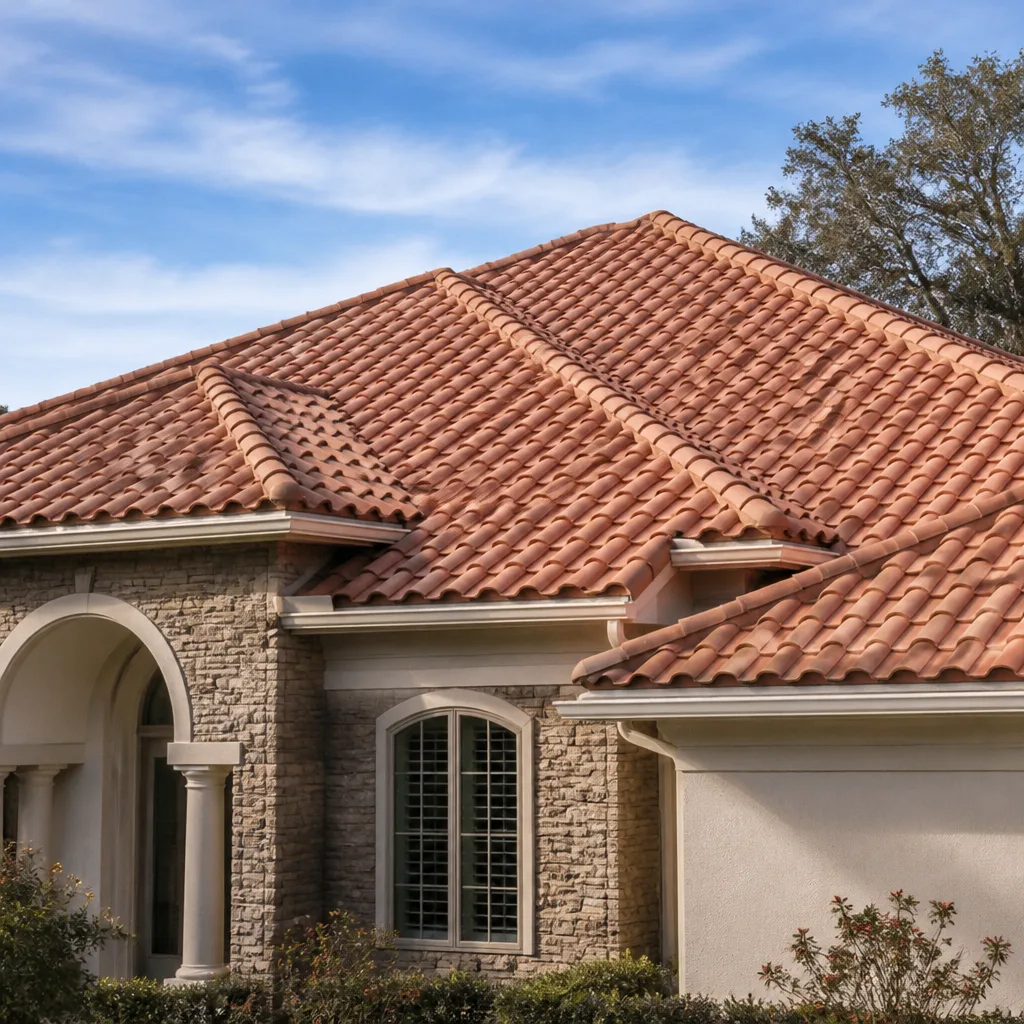 Tile roofing
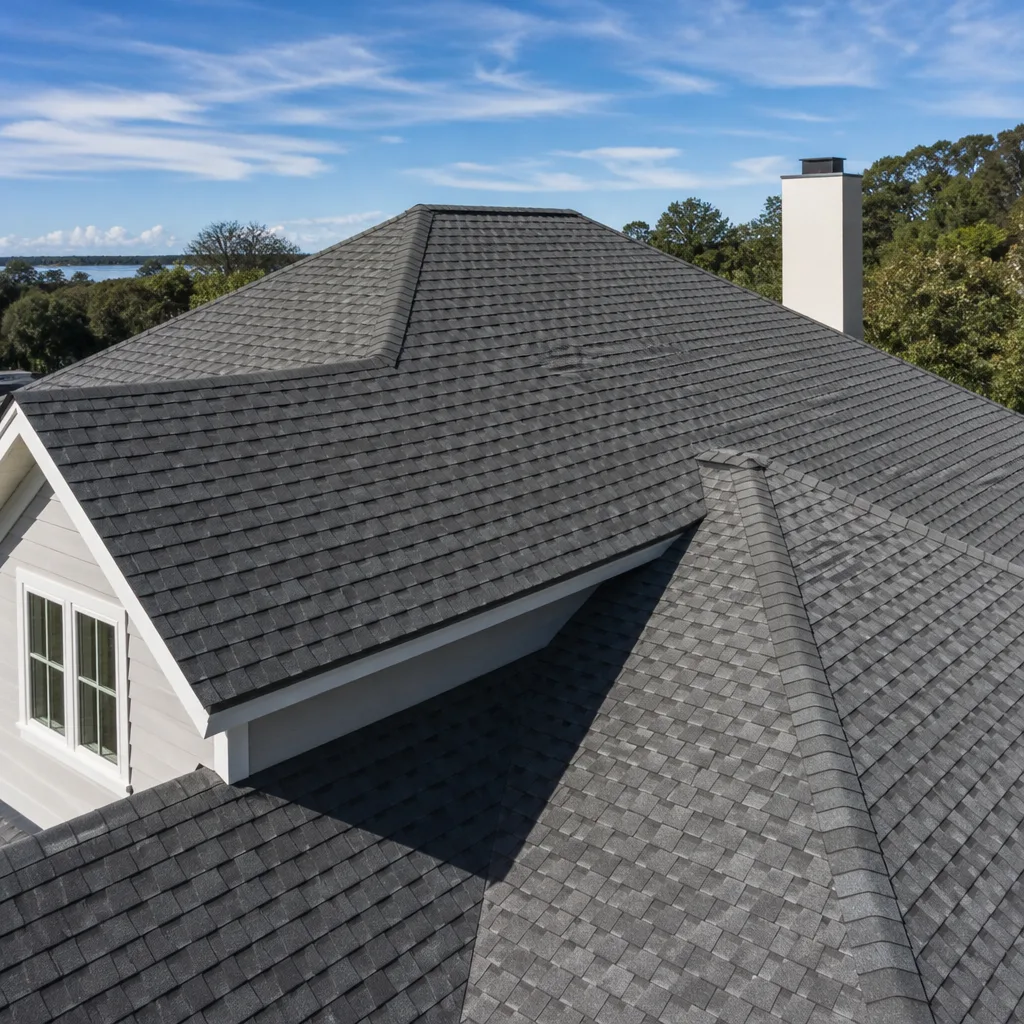 GAF
 Owens Corning
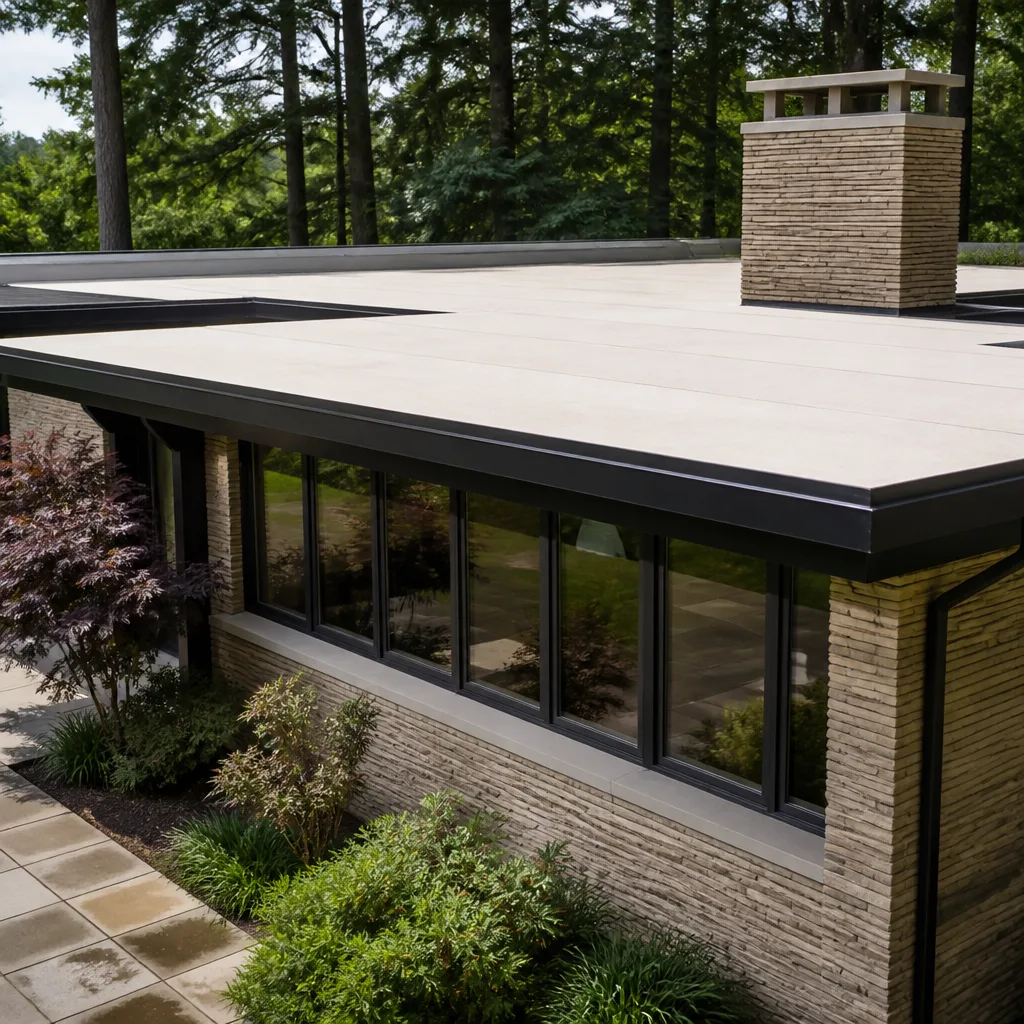 Flat & low-slope
Free roof inspection with deck photos before we talk money - GAF and Owens Corning certified installation
Roof Repair Maintenance Checklist for Yorba Linda Homeowners
The number one reason Yorba Linda roofs fail prematurely isn’t storm damage. It’s deferred maintenance on things a homeowner could spot in 20 minutes with a pair of binoculars. In our experience, the roofs that last decades in this city aren’t lucky. They’re watched. This guide walks you through exactly what to check, when to check it, and why Yorba Linda’s specific climate demands a different maintenance rhythm than the generic checklists written for wetter, colder parts of the country.
Quick Answer
A Yorba Linda roof maintenance routine should include twice-yearly visual inspections (spring and late fall), focused checks on tile ridge caps and mortar after Santa Ana wind events, attic ventilation verification before peak summer heat, valley flashing inspection at the dry-to-wet seasonal transition, and debris removal around eucalyptus and palm trees. Most repairs that turn into full replacements in Yorba Linda could have been caught during a 20-minute exterior inspection.
Styles & brands we work with
Table of Contents
- Why Yorba Linda Needs a Different Maintenance Calendar
- The 20-Minute Binocular Inspection
- Tile Roof Checks After Santa Ana Wind Events
- Attic Ventilation and the UV Problem
- Valley Flashing and the Dry-to-Wet Crack
- Eucalyptus, Palm, and Debris Accumulation
- The Documentation Habit That Pays
- Common Mistakes to Avoid
- When to Call a Professional
- Frequently Asked Questions
- The Bottom Line
Why Yorba Linda Needs a Different Maintenance Calendar
Most roof maintenance guides follow a standard rhythm: check in spring after winter snow, check in fall before freezing temperatures. That approach fails in Yorba Linda because our climate punishes roofs differently. We don’t get snow load. We don’t get ice dams. What we get is roughly 280 days of direct sun annually, October through January Santa Ana wind events that can hit 60+ mph in the foothills, and a dry-wet seasonal swing that expands and contracts roofing materials at joints and seams.
The maintenance calendar that works here is built around two anchors:
- Late October to early November: This is the pre-rain window. June through September heat has already done its damage. You want to catch cracked sealant, lifted flashing, and displaced tiles before the first real rain arrives. If you only inspect once a year, this is the one to do.
- April to early May: Post-rain and post-Santa Ana season. The rains have tested your roof’s seals, and the winds have been beating on ridge caps for four months. This is the repair-and-recover window before summer heat compounds any small failures.
Some homeowners in the Yorba Linda hills above Bastanchury Road check a third time in August, specifically for UV-related granule loss and flashing separation at peak heat. That’s not excessive. If your roof faces south or southwest with no shade cover, August is when the real damage is visible.
If you’re not sure what condition your roof is in right now, a Roof Inspection in Yorba Linda gives you a baseline to work from. We’ve found that homeowners who get one professional inspection and then maintain from that baseline catch problems years earlier than those who guess.
The 20-Minute Binocular Inspection
You don’t need to climb on your roof to catch most early-warning signs. Standing in your yard with a decent pair of binoculars works for about 80% of what professionals look for on the first pass. Here’s the exact sequence we use when we walk a property.
- Stand at the street and scan the roof plane as a whole. Look for any shingle or tile that’s out of alignment, any sagging between rafters, and any area where the color or texture changes abruptly. A roof should look uniform from this distance. Anything that catches your eye is worth a closer look.
- Walk the perimeter and check the eaves. Look at the underside of the roof edge where it overhangs. Stains here mean water is getting in somewhere above and traveling down. In Yorba Linda’s dry climate, these stains stay visible for years because they don’t get washed away repeatedly. A faint water stain on the eaves is old evidence of a leak that may still be active.
- Check the ridge line from both gable ends. The ridge should run straight. Any dip, rise, or wobble indicates structure movement or fastener failure underneath. This matters more on tile roofs, where a displaced ridge cap lets wind get under the whole system.
- Inspect all pipe jacks, vents, and penetrations. From the ground you can usually see the rubber boot around plumbing pipes. In Yorba Linda sun, rubber boots dry, crack, and separate in as little as 8 to 10 years. The rubber collar should sit flush against the pipe with no visible gap.
- Look at the flashing where roof planes meet walls. Headwalls and sidewalls are common leak points. The metal flashing should sit tight against the wall with no gap, and the counter-flashing should overlap it properly. If you can see caulk smeared along the seam, someone’s already patched it once, which means it’s been leaking.
As Roof Repair in Yorba Linda specialists, we see the same pattern repeatedly: homeowners skip these ground-level checks, and by the time water shows up inside, the repair has gone from a $300 flashing fix to a $3,000 deck repair. The binocular pass costs nothing.
Tile Roof Checks After Santa Ana Wind Events
Tile roofs are the most common roof type in Yorba Linda, from the newer developments around Bryant Ranch to the custom homes in the hills. Tile is durable, but it has two specific failure modes that Santa Ana winds exploit: ridge cap displacement and mortar cracking.
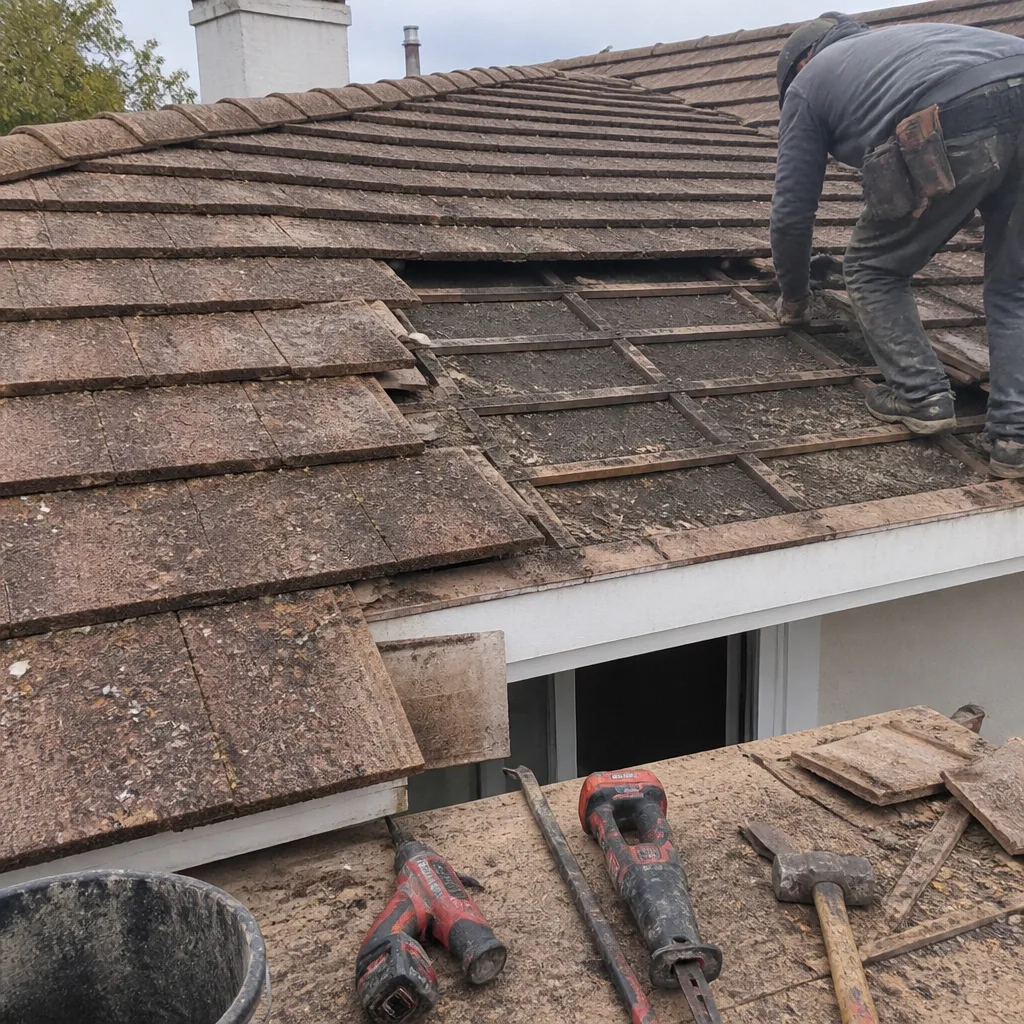
Ridge caps are the curved or flat tiles that run along the top of the roof. They’re typically set in mortar or fixed with mechanical fasteners. Over years of heat cycling, the mortar bed underneath them micro-cracks. It looks fine. Then a Santa Ana event comes through with sustained 40 mph gusts, and the wind gets underneath the cap, lifts it slightly, and cracks the mortar the rest of the way. The cap doesn’t always blow off entirely. It shifts an inch or two, or it sits slightly off-center, and you’d never notice unless you’re looking specifically for it.
After any wind event over about 35 mph, do this:
- Scan the entire ridge line with binoculars, looking for any cap tile that sits higher, lower, or off-center compared to its neighbors.
- Look for gaps at the mortar joint. A hairline crack is one thing; a gap you can see from the ground is an open entry point for rain.
- Check the hip lines (the diagonal ridges where roof planes meet). These get the same wind load as the ridge and fail the same way.
- Look in your yard and along the roof edge for tile fragments. A tile that’s chipped or broken at the edge means impact damage from a flying branch, and the rest of the roof took a beating that day too.
Mortar cracking at the hips and ridges is a repair that takes an experienced roofer under an hour in most cases. Left alone, it lets water run directly into the underlayment, which then fails at its own pace. By the time you see a ceiling stain, the underlayment has been degrading for months or years. That’s the repair-first philosophy we follow at Weston Roof Repair home – most tile roof problems are fixable at a fraction of replacement cost if caught before the underlayment is compromised.
Attic Ventilation and the UV Problem
Here’s something most generic checklists won’t tell you: the biggest threat to an asphalt shingle roof in Yorba Linda isn’t wind or rain. It’s attic heat. When your attic space gets too hot – and in July and August, attic temperatures in Yorba Linda routinely hit 140 to 150 degrees Fahrenheit – the heat bakes the shingles from underneath while the sun bakes them from above. Granule loss accelerates. The asphalt in the shingle dries out and becomes brittle. Shingles that should last 25 years might fail in 12.
The fix is ventilation, and checking it is simple:
- Go into your attic on a hot afternoon. If it’s more than about 20 degrees hotter than outside, ventilation is inadequate.
- Look at the underside of the roof decking. Dark staining or warped wood indicates chronic heat and moisture trapped in the attic.
- Check your intake vents. Most Yorba Linda homes have soffit vents along the eaves. If they’re blocked by insulation, dust, or – very common here – debris blown up by wind, airflow is choked.
- Verify exhaust vents are clear. Ridge vents, box vents, turbine vents, or powered attic fans should be unobstructed. Bird nesting in vent openings is common in Yorba Linda.
The math: a balanced system pulls cool air in through the soffits and pushes hot air out through the ridge or upper vents. Without it, your shingle warranty may not be honored by manufacturers like CertainTeed or Owens Corning – most shingle manufacturers require adequate ventilation as a warranty condition. If you’re replacing shingles on a house with a hot attic, you’re throwing money at the symptom, not the cause.
A Roof Replacement in Yorba Linda done correctly starts with a ventilation assessment. But if your shingles still have life in them, adding ventilation now can buy you several more years of service. That’s the kind of repair-first recommendation we make routinely.
Valley Flashing and the Dry-to-Wet Crack
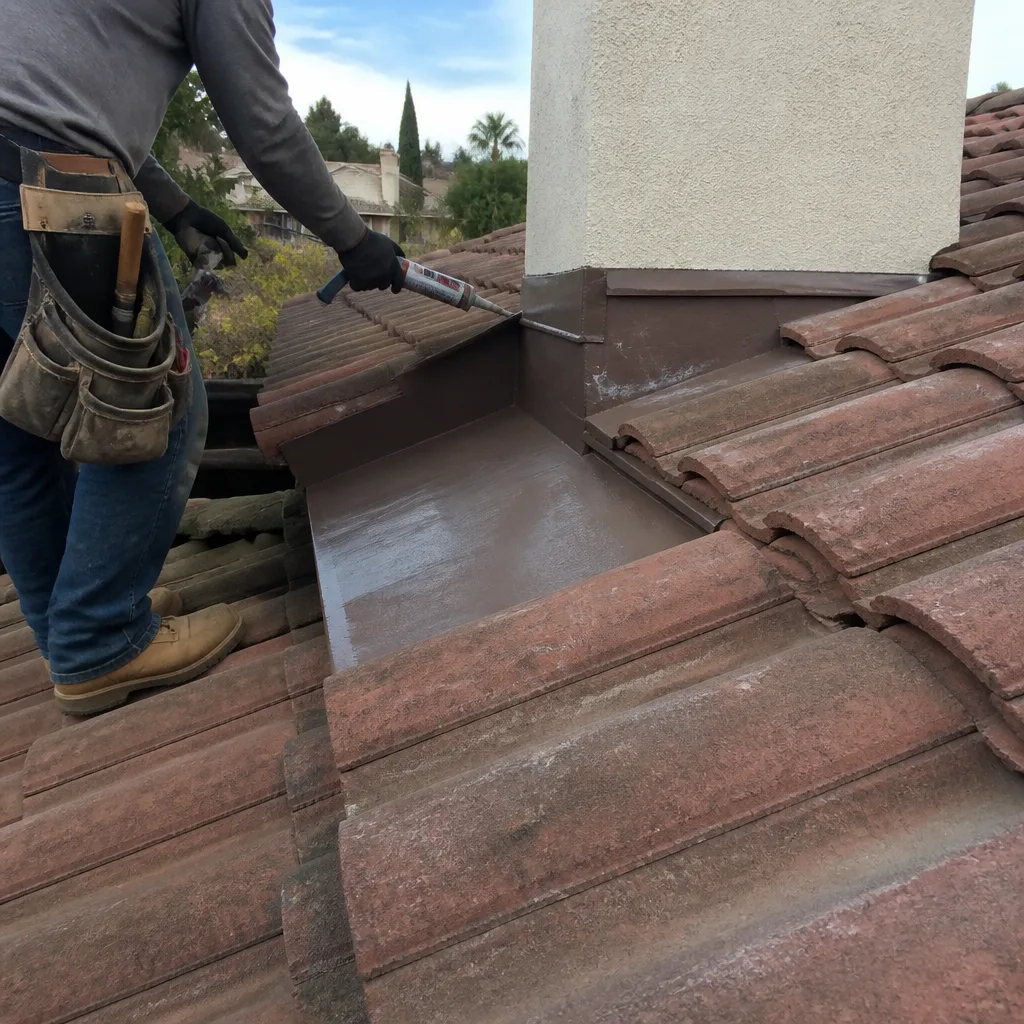
Roof valleys – the V-shaped channels where two roof planes meet – catch and direct the most water per square foot of any part of the roof. In most of California, valleys are lined with metal flashing. In Yorba Linda, that metal spends nine months cooking in the sun and then gets hit with rain. The thermal expansion and contraction is extreme, and it’s why valley flashing failure is the most common leak source we repair here.
The failure mode is specific: sealant at the valley seams dries out over summer, then when the first rain comes in November or December, water finds the gap. Homeowners assume the roof is fine because it’s been dry for months. Then the first heavy rain arrives and the ceiling stains follow within a week.
Inspect your valleys in late October before the rain starts:
- Look for lifting or curling at the metal edges, especially where the valley flashing meets shingles or tiles.
- Check for sealant that’s turned chalky white or is flaking away. That material is dead and needs replacement.
- Lift aside leaves and debris at the valley bottom and look for rust or pinhole corrosion on the metal surface.
- If your roof has woven valleys (shingles woven together rather than metal-lined), check that no shingles are lifted or torn along the valley line.
Valley repairs are among the most cost-effective interventions available. A small reseal job in October prevents a leak in December, and the difference in cost between those two repairs is often tenfold.
Eucalyptus, Palm, and Debris Accumulation
Yorba Linda has one of the largest concentrations of eucalyptus trees in North Orange County. These trees are beautiful. They’re also relentless debris producers that cause specific roof problems most homeowners overlook.
Eucalyptus leaves are long, thin, and resinous. They don’t break down quickly. They pile up in valleys, behind chimneys, around skylights, and along the up-slope side of any roof penetration. When they get wet, they hold moisture against the roofing surface for weeks. On asphalt shingles, that accelerates granule loss. On tile, it creates a damp microclimate at mortar joints that weakens them over time.
Palm trees present a different issue. Fronds that break loose in Santa Ana winds can strike tile roofs with enough force to crack tiles – we’ve replaced perfectly good tiles on roofs in the Yorba Linda hills that were fractured by palm debris. The flower stalks and seed clusters also clog drains and gutter systems quickly.
The maintenance routine:
- Clear roof valleys and behind penetrations every three months, not just before rain season. Debris left in place during summer still causes damage, even without moisture.
- If you have a gutterless or leaf-guard system, inspect more often. Some leaf guards are designed for small leaves and fail with eucalyptus debris, which is long and fibrous and jams the guard openings. A gutter system that’s not actually draining is worse than having no gutter at all in Yorba Linda’s quick rain bursts.
- Trim overhanging branches at least 6 feet from the roof plane. Contact is constant abrasion. During wind events, contact is repeated impact.
One note on roofs we work on constantly: the combination of eucalyptus debris and valley flashing failure is a pairing we see more often in older Yorba Linda neighborhoods like the area around Travis Ranch. The trees are mature, the roofs are mature, and the two don’t play well together without regular clearing.
The Documentation Habit That Pays
Twice a year, take 15 minutes and photograph your roof. Not because it’s fun – because documentation is leverage. Here’s what we mean.
Photograph the roof from all four sides of the house in good light. Get close-ups of the valleys, the flashing at walls and penetrations, the ridge line, and any existing repair areas. Store these photos in a folder with the date. Do it every October and every April.
What you’re building is a visual timeline of your roof’s condition. Here’s why that matters:
If you file an insurance claim for storm damage, the adjuster wants evidence that the damage happened in that storm, not from years of neglect. Six months of dated photos showing the roof in good condition before the event is the best evidence you can provide. We’ve watched homeowners get claims approved with photo documentation who would have been denied on the adjuster’s word alone.
If you sell the house, this timeline answers the buyer’s question – “How has the roof been maintained?” – with proof instead of promises. In Yorba Linda’s real estate market, a documented maintenance history on a roof adds measurable value. Buyers have options. A home with a photo-documented roof history is a home that closes faster.
And for your own decision-making, the timeline tells you if something is actually changing. A crack that’s been identical in three rounds of photos is stable. A crack that’s grown between October and April is active. That single observation tells you whether to repair now or keep watching.
Common Mistakes to Avoid
- Waiting for a leak to inspect the roof. By the time water is visible inside a Yorba Linda home, the roofing system has been compromised for months. The leak you see is the endpoint, not the beginning.
- Using a pressure washer to clean the roof. High-pressure water tears granules off asphalt shingles and breaks the glazing on roof tiles. It also forces water under flashing and into areas that are supposed to stay dry. We see pressure-washer damage every month.
- Caulking over failed flashing instead of replacing it. Caulk is a temporary patch. On roof flashing exposed to Yorba Linda heat, it fails within one season. The repair that lasts is new flashing, properly installed.
- Ignoring the tile that’s slightly off-center on the ridge. A ridge cap that’s shifted half an inch is already loose. It will not reseat itself, and the next wind event will move it further. Fix minor displacement before it becomes a broken tile on your lawn.
- Blocking soffit vents when adding insulation. This happens constantly in Yorba Linda attics where homeowners add blown-in insulation. The insulation covers the intake vents, the attic overheats, and shingles die from underneath while the homeowner wonders why.
- Assuming a newer roof doesn’t need inspection. New roofs have installation defects at roughly the same rate as old roofs develop age-related failures. Year one inspections catch workmanship issues while they’re still under the installer’s warranty.
When to Call a Professional
Some maintenance items are safe and appropriate for a homeowner. Others aren’t. If you see signs of water intrusion – ceiling stains, peeling paint near the roofline, or attic decking that’s darkened – the issue is beyond a checklist. So is any repair that requires walking the roof. Tile roofs in particular are unforgiving: walking on them without experience cracks tiles and creates the very problems you’re trying to prevent. If your binocular check turns up anything questionable, Weston Roof Repair offers free estimates in Yorba Linda. Call (833) 589-6925 and we’ll inspect it first. If a repair fixes it, that’s what we’ll tell you.
Frequently Asked Questions
Twice a year at minimum – once in late October before the rainy season and once in April after the Santa Ana season and winter rains have passed. If your roof faces south or southwest with full sun exposure, add a third check in August to monitor UV-related degradation. Homes in the Yorba Linda hills exposed to wind may also want a quick ridge check after any wind event over 35 mph. Call (833) 589-6925 if any check turns up something questionable.
Minor roof repairs in Yorba Linda typically run between $300 and $800 for small flashing fixes, sealing, and single-tile replacements, while more involved repairs like valley replacement or multiple-tile resetting generally fall between $800 and $2,500. Full underlayment replacement under tiles is a larger job that can exceed that range. For an exact quote on your specific repair, call (833) 589-6925 – estimates are free.
Tile roofs are durable but not maintenance-free. The tiles themselves can last 50 years or more, but the underlayment beneath them fails much sooner – often in 25 to 35 years in Yorba Linda’s heat. The most common maintenance items are ridge cap re-bedding after wind events, mortar crack repair at hips and ridges, and periodic valley clearing. A properly maintained tile roof with good underlayment will outlast most alternatives.
Attic heat is the primary driver of shingle granule loss in Yorba Linda. When attic temperatures exceed 140 degrees Fahrenheit in summer, the shingles bake from below, the asphalt binder breaks down, and granules release. Inadequate ventilation compounds the problem and voids most manufacturer warranties, including those from Atlas and IKO. Improved attic ventilation is often the single highest-impact repair for extending shingle roof life here.
Yes. Eucalyptus leaves hold moisture and contain oils that stain and degrade roofing materials. They accumulate in valleys and behind roof penetrations where they prevent proper drainage. During summer they create fire risk; during winter they create moisture damage. Clear roof surfaces every three months in Yorba Linda if you have eucalyptus within 50 feet of the house. If your leaf guards are jamming with eucalyptus debris, they may need to be replaced with a system-sized for your specific tree load. Call (833) 589-6925 to have us evaluate your setup.
It should. A real inspection – not a sales visit – gives you a factual condition report with specific findings and recommended actions. That’s the model we follow: inspection is a standalone service for exactly that reason. We work with GAF, CertainTeed, Owens Corning, IKO, Atlas, Tamko, and Boral, so the recommendation you get is based on what your roof needs, not what brand we happen to stock. Roof Inspection in Yorba Linda is the fastest way to know where you stand.
The Bottom Line
Yorba Linda roofs don’t fail dramatically. They fail gradually, in the heat of August and the wind of October, while nobody is watching. The maintenance rhythm that works here is simple: check before rain season, check after wind season, and don’t let small things accumulate. A displaced ridge cap is a $200 repair today and a $2,000 repair next spring. Valley flashing that’s re-sealed in October prevents a ceiling stain in December. And ventilation that’s working properly adds years to every shingle on the roof. You don’t need to be a roofer to catch these problems. You need a routine, a pair of binoculars, and the willingness to act on what you find.
If you’d rather have an experienced eye on it, Roof Repair in Yorba Linda starts with a conversation about what you’ve observed. Seven brands. One company. No pressure to pick what’s convenient for us.
Get an Honest Evaluation of Your Roof
If anything in this guide raised a question about your own roof, start with an inspection. It’s the fastest way to know whether you’re looking at a simple repair, an ongoing maintenance issue, or a roof that’s approaching the end of its life. Call (833) 589-6925 to schedule a free estimate. We’ll inspect it first. If a repair fixes it, that’s what we’ll tell you.
Written by the team at Weston Roof Repair, serving Yorba Linda since 2015.
See the difference
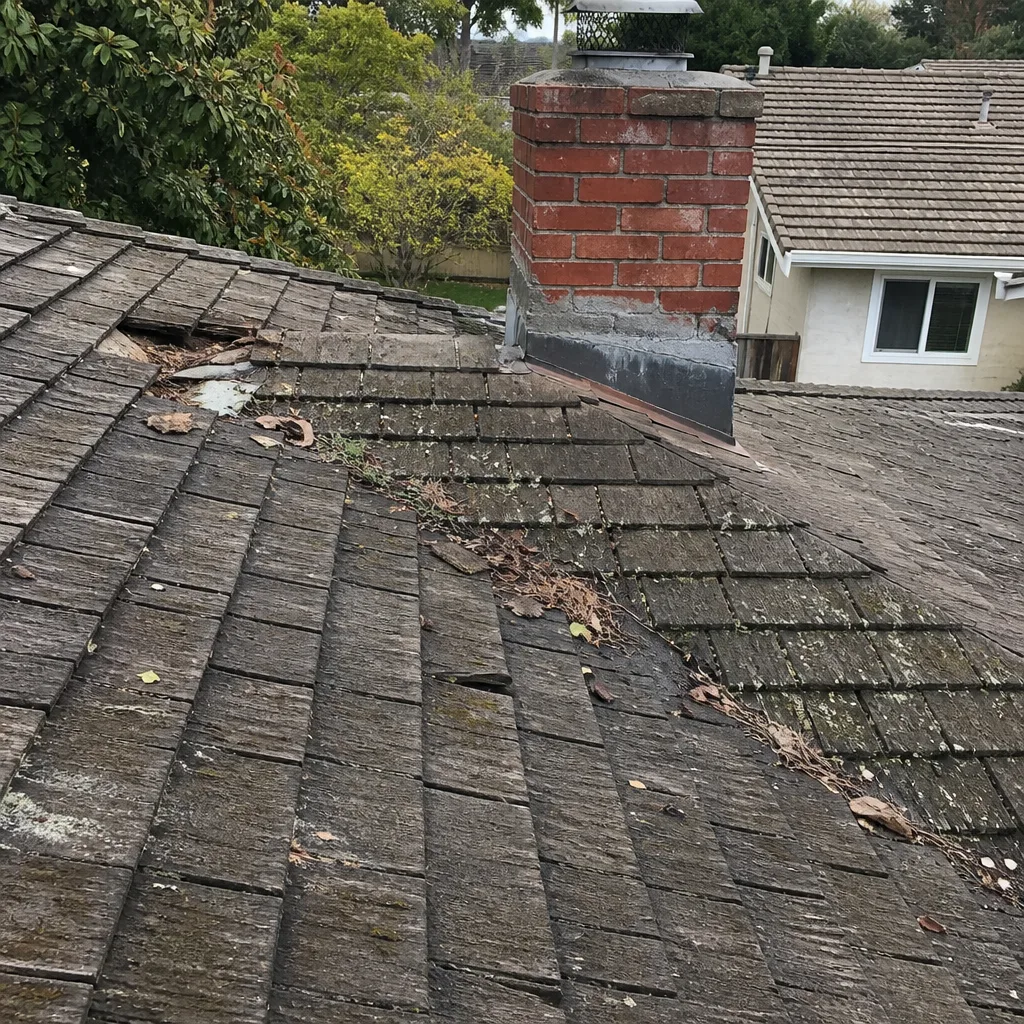 Before
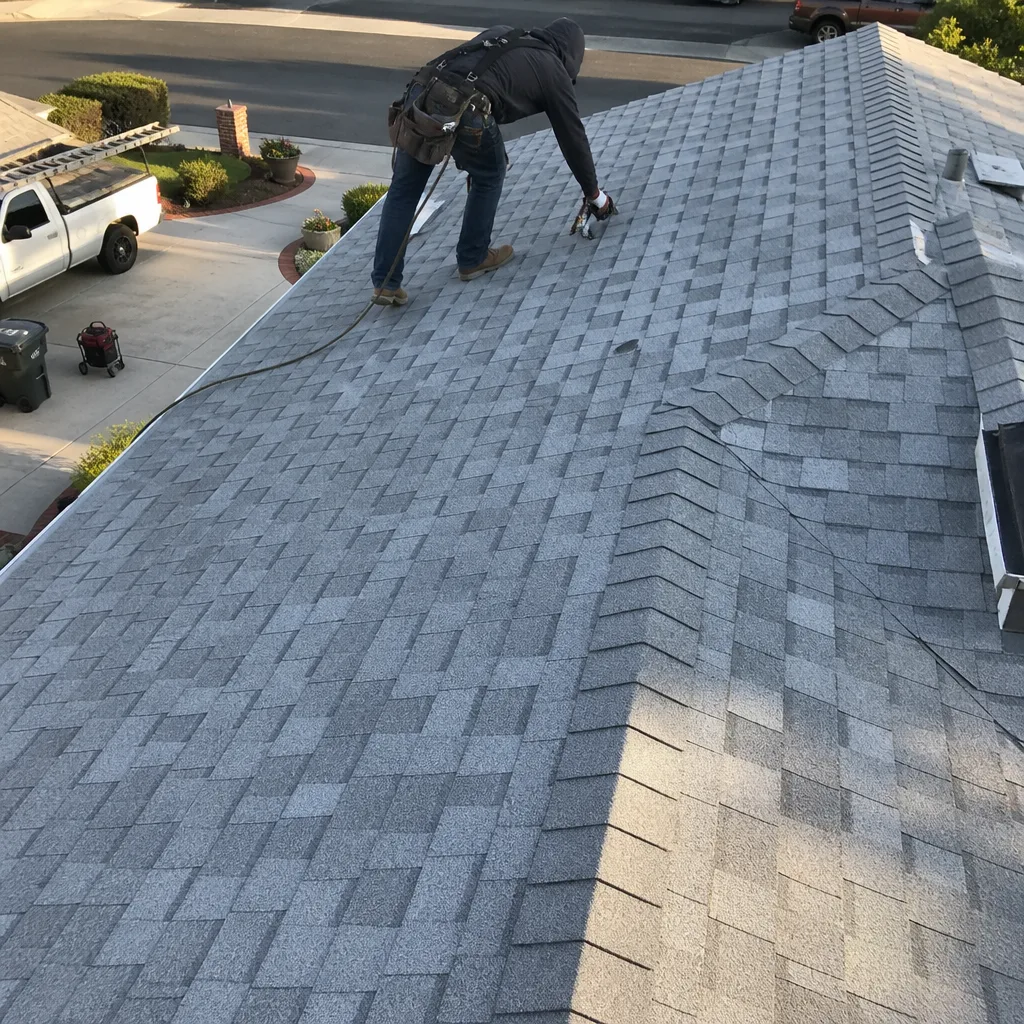 After
 Before
 After
 Before
 After